
Malaysia has surpassed traditional top investors like South Korea, Japan, Taiwan and Singapore to become the biggest foreign investor in Vietnam in the first nine months of this year, says the Foreign Investment Agency.
The agency of the Ministry of Planning and Investment (MPI) says the country attracted a total of US$57.12 billion in foreign direct investment (FDI) in January-September, and that Malaysia made up some 26% of the amount via 37 licensed projects. Malaysia’s rising profile in Vietnam’s FDI scenario, according to the MPI, is attributed to some big-ticket projects licensed this year.
These include a US$9.8 billion venture between Maju Stabil Sdn. Bhd, a unit of Malaysia’s Lion Group, and Vietnam Shipbuilding Industry Group (Vinashin), to develop a giant steel complex and supporting facilities in the central coast province of Ninh Thuan. This was also the biggest FDI project to be licensed in Vietnam in the first nine months.
Vietnam’s steady economic growth over years and its bright prospects have encouraged Malaysian investors to pour money into the country, say experts. Vietnam’s entry into the World Trade Organization (WTO) has opened many opportunities for foreign investors, including Malaysian investors. Apart from small and medium enterprises, many big Malaysian businesses are setting up production facilities here. These advantages have prompted Malaysian investors to come to Vietnam where they are particularly interested in industry and real estate.
Real estate projects took the lead and one Malaysian investor that has major plans for real estate investment is Berjaya.
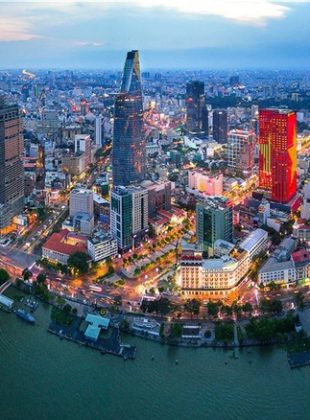
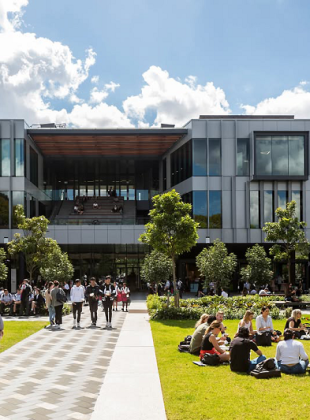
 Berjaya Land Berhad of Malaysia recently received an investment certificate for a US$3.5-billion project in HCMC to develop what will become Vietnam’s first university township.
The company will start work early next year on the Vietnam International University Township project which will cover 925 hectares in Hoc Mon District.
Development components will include an international university and colleges and schools on 110 hectares; commercial, civic, cultural and residential developments; as well as medical centers, gardens and parks, and sports and recreation facilities.
The company has also received other investment certificates for real estate projects, including the US$930 million Vietnam Financial Center covering 6.8 hectares on Ba Thang Hai Street in HCMC’s District 10.
Berjaya Land Bhd is looking to become a leading real estate investor in Vietnam, starting with projects to be developed over the next 12 years in both HCMC and Hanoi and estimated to cost a total of US$10 billion.
Besides Berjaya, other Malaysian investors are looking for opportunities to invest in property in Vietnam. Malaysia’s Giant Group Limited has plans to pour US$5 billion into the Mekong Delta province of Dong Thap, developing a hotel, a new urban area, and an entertainment complex.
The current real estate market is difficult but many Malaysian investors are interested in the sector and are looking for new projects. They explained that although the real estate market is cooling down, this only happens in the short term. The long term real estate potential in Vietnam remains great. A delegation of the International Real Estate Federation (FIABCI) from Malaysia has recently shown special interest in the real estate sector in HCMC.
The visitors said they wanted to team up with local partners in new projects here, including those for low-income earners. Areas of their interest include residential areas, retail stores, office buildings, and apartment buildings. They were also keen on major property projects like hotels, hospitals and shopping malls. Some Malaysian investors are also interested in environmental rehabilitation in Vietnam.
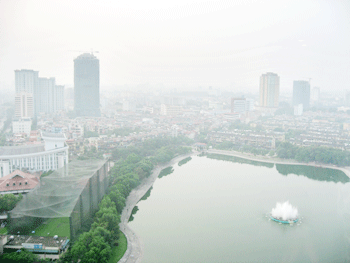
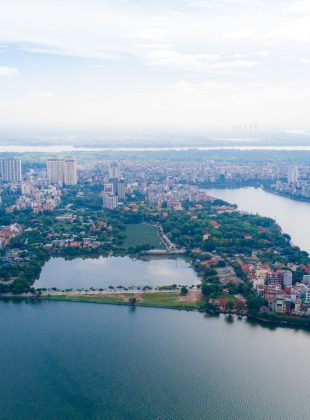
Malaysia’s Gamuda recently commenced work on a wastewater treatment plant as a component of a US$2-billion project to rehabilitate the327-hectare Yen So Park in Hanoi. Yen So Park holds more than half of the capital city’s wastewater before the wastewater is discharged into the Red River. Therefore, the five lakes inside the park are heavily polluted. The 8.8-hectare waste water treatment plant will require a total investment capital of US$233 million.
This facility is considered the most important component of the Yen So Park project. Gamuda said the plant would be able to treat about 200,000 square meters of wastewater a day, equivalent to nearly half of Hanoi’s household sewage, serving 1.2-1.5 million people to the city.
Meanwhile, Malaysia’s Wijaya Baru Group has been conducting a feasibility study for two environmental projects in HCMC since the signing of memorandums with HCMC earlier this year. It will build a facility in District 2 to treat wastewater from residential areas in the basin of the Nhieu Loc-Thi Nghe Canal. Vietnam has so far attracted over US$142 billion with about 9,580 FDI projects. Taiwan is the biggest foreign investor in Vietnam with some 1,950 projects capitalized at over US$19.46 billion. Malaysia has 281 projects with investment capital of US$17.7 billion.