
By using this site, you agree to the Privacy Policy and Terms of Use.
Accept
Ashui.comAshui.comAshui.com
  • Home
    • Bookmarks
    • English
      • News
      • Projects
      • Products
    • Ashui Awards
    • Giới thiệu
    • Quảng cáo / PR
    • Liên hệ
  • Tin tức / Sự kiện
    • Tin trong nước
    • Tin thế giới
    • Sự kiện
    Tin tức / Sự kiệnĐọc tiếp
    Hà Nội đặt mục tiêu giảm 40% ùn tắc giao thông đến năm 2030
    Báo Xây dựng 09/12/2025
    Xây nhà ở phù hợp với truyền thống và thích ứng với thiên tai
    TTXVN 07/12/2025
    TPHCM cần đặt mục tiêu cạnh tranh với các đô thị quốc tế
    KTSG Online 06/12/2025
    Hà Nội khẩn cấp xây 8 hồ rộng gần 150 ha, tăng sức chống ngập đô thị
    KTSG Online 05/12/2025
    Triển lãm “Khám phá của trẻ em về Hệ sinh thái Sông Hồng”
    Ashui.com 03/12/2025
  • Chuyên mục
    • Kiến trúc
    • Nội – ngoại thất
    • Quy hoạch đô thị
    • Bất động sản
    • Năng lượng – Môi trường
    • Phong thủy
  • Công nghệ
    • Công nghệ mới
    • Giải pháp
    • Xu hướng
    • Ứng dụng
  • Vật liệu / Thiết bị
    • Vật liệu xây dựng
    • Trang thiết bị
    • Trang trí nội thất
    • Thị trường
  • Dự án
    • Giới thiệu dự án
    • Tư vấn thiết kế
    • Kinh tế / Pháp luật
  • Tương tác
    • Chuyên đề
    • Góc nhìn
    • Phản biện
    • Đối thoại
    • Q&A
    • Điểm đến
    • Nhìn ra thế giới
  • Cộng đồng
    • Kiến trúc sư
    • Kỹ sư
    • Thiết kế / Sáng tạo
    • Sinh viên
    • Tuyển dụng
    • Ashui Awards Tour
    • CLB Điện ảnh Kiến trúc
    • CLB Kiến trúc Xanh TPHCM
Font ResizerAa
Ashui.comAshui.com
Font ResizerAa
  • Home
  • Tin tức / Sự kiện
  • Chuyên mục
  • Công nghệ
  • Vật liệu / Thiết bị
  • Dự án
  • Tương tác
  • Cộng đồng
  • Home
    • Bookmarks
    • English
    • Ashui Awards
    • Giới thiệu
    • Quảng cáo / PR
    • Liên hệ
  • Tin tức / Sự kiện
    • Tin trong nước
    • Tin thế giới
    • Sự kiện
  • Chuyên mục
    • Kiến trúc
    • Nội – ngoại thất
    • Quy hoạch đô thị
    • Bất động sản
    • Năng lượng – Môi trường
    • Phong thủy
  • Công nghệ
    • Công nghệ mới
    • Giải pháp
    • Xu hướng
    • Ứng dụng
  • Vật liệu / Thiết bị
    • Vật liệu xây dựng
    • Trang thiết bị
    • Trang trí nội thất
    • Thị trường
  • Dự án
    • Giới thiệu dự án
    • Tư vấn thiết kế
    • Kinh tế / Pháp luật
  • Tương tác
    • Chuyên đề
    • Góc nhìn
    • Phản biện
    • Đối thoại
    • Q&A
    • Điểm đến
    • Nhìn ra thế giới
  • Cộng đồng
    • Kiến trúc sư
    • Kỹ sư
    • Thiết kế / Sáng tạo
    • Sinh viên
    • Tuyển dụng
    • Ashui Awards Tour
    • CLB Điện ảnh Kiến trúc
    • CLB Kiến trúc Xanh TPHCM
Các kênh mạng xã hội
  • Advertise
© 2000-2025 Ashui.com. All Rights Reserved.
News

Technology solutions key to Hà Nội’s wastewater issues

Ashui.com 24/02/2024
4 phút đọc
SHARE

Hà Nội’s drainage system in the inner city and old urban areas were built in the early 20th century.

With limited systems for water sewerage and drainage in the capital city, many experts agree that technology solutions are vital to addressing wastewater problems.
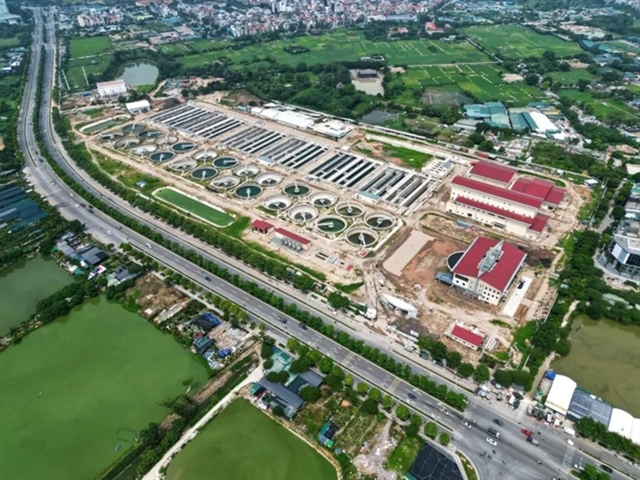

Yên Xá treatment plant is seen as one of the capital city’s most critical projects to address wastewater problems. (Photo: Tuấn Anh, VNA/VNS)

According to Dr Lê Xuân Rao, president of Hà Nội Union of Science and Technology Associations, 100 per cent of household wastewater in the capital city must be collected and treated by 2030, with 41 treatment plants that each have a capacity of 1.8 million cubic metres per day.

Hà Nội currently counts only six wastewater treatment plants, which are Kim Liên, Trúc Bạch, Yên Sở, Hồ Tây, Bảy Mẫu, Bắc Thăng Long-Vân Trì. Most of them are located along the Tô Lịch River basin.

Their combined capacity can only respond to around 28.8 per cent of the total wastewater volume requiring treatment.

Yên Xá water treatment plant, which has a capacity of 270,000 cubic metres per day, is expected to go into operation in 2025 and increase the percentage of treated wastewater to around 50 per cent.

According to the city’s plan for urban wastewater treatment and drainage system for the 2021-25 period, Hà Nội will continue working on large-scale treatment plants, building a decentralised treatment system for each area, residence or semi-urban and rural clusters situated far from the central urban zones.

In addition to infrastructure development, the capital city also plans to raise awareness of environmental protection and water drainage fees, while also allocating financial resources and promulgating policies for coordination among different stakeholders, said Rao.

Hà Nội’s drainage system in the inner city and old urban areas were built in the early 20th century, according to Dr Trần Đức Hạ, former director of the Water Supply and Sewerage Research Institute.

However, the sewer system does not cover the entire urban zone, while drainage points for household wastewater currently have yet to meet the requirements in terms of both quantity and technical conditions, he said.

To improve the wastewater quality in Hà Nội, Hạ believes measures should be taken to enhance the inner-city lakes and rivers’ ability for self-cleaning, while also combining these structures with public spaces for entertainment, cultural and religious activities.

A water quality and hydrological monitoring system is also necessary to regulate water flow and control discharge from factories and treatment plants into the rivers, he added.

Several technology solutions for wastewater treatment have been put into application in the capital city.

Hanoi Sewerage and Drainage One Member Co Ltd developed and introduced grease separators named EN 1825 and EN 858 with 90-95 per cent effectiveness, said the head of the system operations department Hoàng Thái Hà.

Removing grease in wastewater at the sources will help reduce blockages as well as dredging, maintenance and repair costs for drainage pipes, he said.

SiGen, an environmental company based in Bà Rịa-Vũng Tàu Province, also produced mosquito-free odourless catch basins, which help accelerate drainage rate, prevent mosquito-transmitted diseases and ensure hygiene in urban areas.

The company has done a pilot test in several wet markets in HCM City, and believes that this invention could be beneficial for wastewater drainage and treatment across the country and in Hà Nội in particular.  

(VNS)

TỪ KHÓA:wastewater treatment plants
Bài trước Phát triển Đà Lạt và vùng phụ cận hướng tới tăng trưởng xanh
Bài tiếp Để không còn tai nạn thảm khốc trên “cao tốc 2 làn”
Bình luận Bình luận

Bình luận Hủy

Bạn phải đăng nhập để gửi bình luận.

Ad imageAd image

Mới cập nhật

Thu hút đầu tư dự án đường sắt bằng nguồn vốn ngoài nhà nước
Kinh tế / Pháp luật 09/12/2025
TID – Đơn vị tiên phong cung cấp giải pháp chống cháy toàn diện cho công trình hiện đại
Trang thiết bị 09/12/2025
Hà Nội đặt mục tiêu giảm 40% ùn tắc giao thông đến năm 2030
Tin trong nước 09/12/2025
TPHCM cần “siêu cơ chế” thu hút nhà đầu tư chiến lược, kiến tạo đô thị tầm khu vực
Góc nhìn 08/12/2025
Từ “đặc thù” đến “đột phá”: mở không gian thể chế cho siêu đô thị sáng tạo TPHCM
Phản biện 08/12/2025
Vietnam’s real estate attracts new generation FDI
News 08/12/2025
Xây nhà ở phù hợp với truyền thống và thích ứng với thiên tai
Tin trong nước 07/12/2025
TP.Hồ Chí Minh: Bốn nhóm giải pháp kiểm soát ô nhiễm từ phát thải xe diesel
Năng lượng - Môi trường 07/12/2025
Không gian văn hóa – Sức mạnh mềm và bản sắc để định vị TPHCM trong mạng lưới đô thị toàn cầu
Góc nhìn 07/12/2025
Hanoi aims for 50% of office buildings to use rooftop solar power
News 06/12/2025
- Advertisement -
Ad imageAd image
© 2000-2025 Ashui.com. All Rights Reserved.
Welcome back!

Sign in to your account

Username hoặc Email của bạn
Mật khẩu

Quên mật khẩu?