
By using this site, you agree to the Privacy Policy and Terms of Use.
Accept
Ashui.comAshui.comAshui.com
  • Home
    • Bookmarks
    • English
      • News
      • Projects
      • Products
    • Ashui Awards
    • Giới thiệu
    • Quảng cáo / PR
    • Liên hệ
  • Tin tức / Sự kiện
    • Tin trong nước
    • Tin thế giới
    • Sự kiện
    Tin tức / Sự kiệnĐọc tiếp
    Đồng Nai dành hơn 800ha đất phát triển nhà ở xã hội đến năm 2030
    Báo Xây dựng 26/03/2026
    Ngành Xây dựng đặt mục tiêu tăng trưởng 14,5%/năm, đô thị hóa vượt 50%
    Tạp chí Xây dựng 26/03/2026
    Nhiệm vụ quy hoạch đô thị Khánh Hòa đến năm 2050: Tập trung rà soát các căn cứ pháp lý
    Báo Xây dựng 24/03/2026
    Thi tuyển phương án kiến trúc cầu Thủ Thiêm 4 (TPHCM)
    Ashui.com 23/03/2026
    Hà Nội sẽ hình thành trung tâm phát triển mật độ cao quanh nhà ga
    Báo Xây dựng 22/03/2026
  • Chuyên mục
    • Kiến trúc
    • Nội – ngoại thất
    • Quy hoạch đô thị
    • Bất động sản
    • Năng lượng – Môi trường
    • Phong thủy
  • Công nghệ
    • Công nghệ mới
    • Giải pháp
    • Xu hướng
    • Ứng dụng
  • Vật liệu / Thiết bị
    • Vật liệu xây dựng
    • Trang thiết bị
    • Trang trí nội ngoại thất
    • Thị trường
  • Dự án
    • Giới thiệu dự án
    • Tư vấn thiết kế
    • Kinh tế / Pháp luật
  • Tương tác
    • Chuyên đề
    • Góc nhìn
    • Phản biện
    • Đối thoại
    • Q&A
    • Điểm đến
    • Nhìn ra thế giới
  • Cộng đồng
    • Kiến trúc sư
    • Kỹ sư
    • Thiết kế / Sáng tạo
    • Sinh viên
    • Tuyển dụng
    • Ashui Awards Tour
    • CLB Điện ảnh Kiến trúc
    • CLB Kiến trúc Xanh TPHCM
Font ResizerAa
Ashui.comAshui.com
Font ResizerAa
  • Home
  • Tin tức / Sự kiện
  • Chuyên mục
  • Công nghệ
  • Vật liệu / Thiết bị
  • Dự án
  • Tương tác
  • Cộng đồng
  • Home
    • Bookmarks
    • English
    • Ashui Awards
    • Giới thiệu
    • Quảng cáo / PR
    • Liên hệ
  • Tin tức / Sự kiện
    • Tin trong nước
    • Tin thế giới
    • Sự kiện
  • Chuyên mục
    • Kiến trúc
    • Nội – ngoại thất
    • Quy hoạch đô thị
    • Bất động sản
    • Năng lượng – Môi trường
    • Phong thủy
  • Công nghệ
    • Công nghệ mới
    • Giải pháp
    • Xu hướng
    • Ứng dụng
  • Vật liệu / Thiết bị
    • Vật liệu xây dựng
    • Trang thiết bị
    • Trang trí nội ngoại thất
    • Thị trường
  • Dự án
    • Giới thiệu dự án
    • Tư vấn thiết kế
    • Kinh tế / Pháp luật
  • Tương tác
    • Chuyên đề
    • Góc nhìn
    • Phản biện
    • Đối thoại
    • Q&A
    • Điểm đến
    • Nhìn ra thế giới
  • Cộng đồng
    • Kiến trúc sư
    • Kỹ sư
    • Thiết kế / Sáng tạo
    • Sinh viên
    • Tuyển dụng
    • Ashui Awards Tour
    • CLB Điện ảnh Kiến trúc
    • CLB Kiến trúc Xanh TPHCM
Các kênh mạng xã hội
  • Advertise
© 2000-2025 Ashui.com. All Rights Reserved.
News

Eco-industrial parks vital to achieving net zero emission target by 2050

Ashui.com 08/09/2024
4 phút đọc
SHARE

The development of eco-industrial parks (eco-IPs) is an effective solution to lower emissions enough to meet the net zero target by 2050 in Vietnam. However, there are still many obstacles, especially in terms of mechanisms.
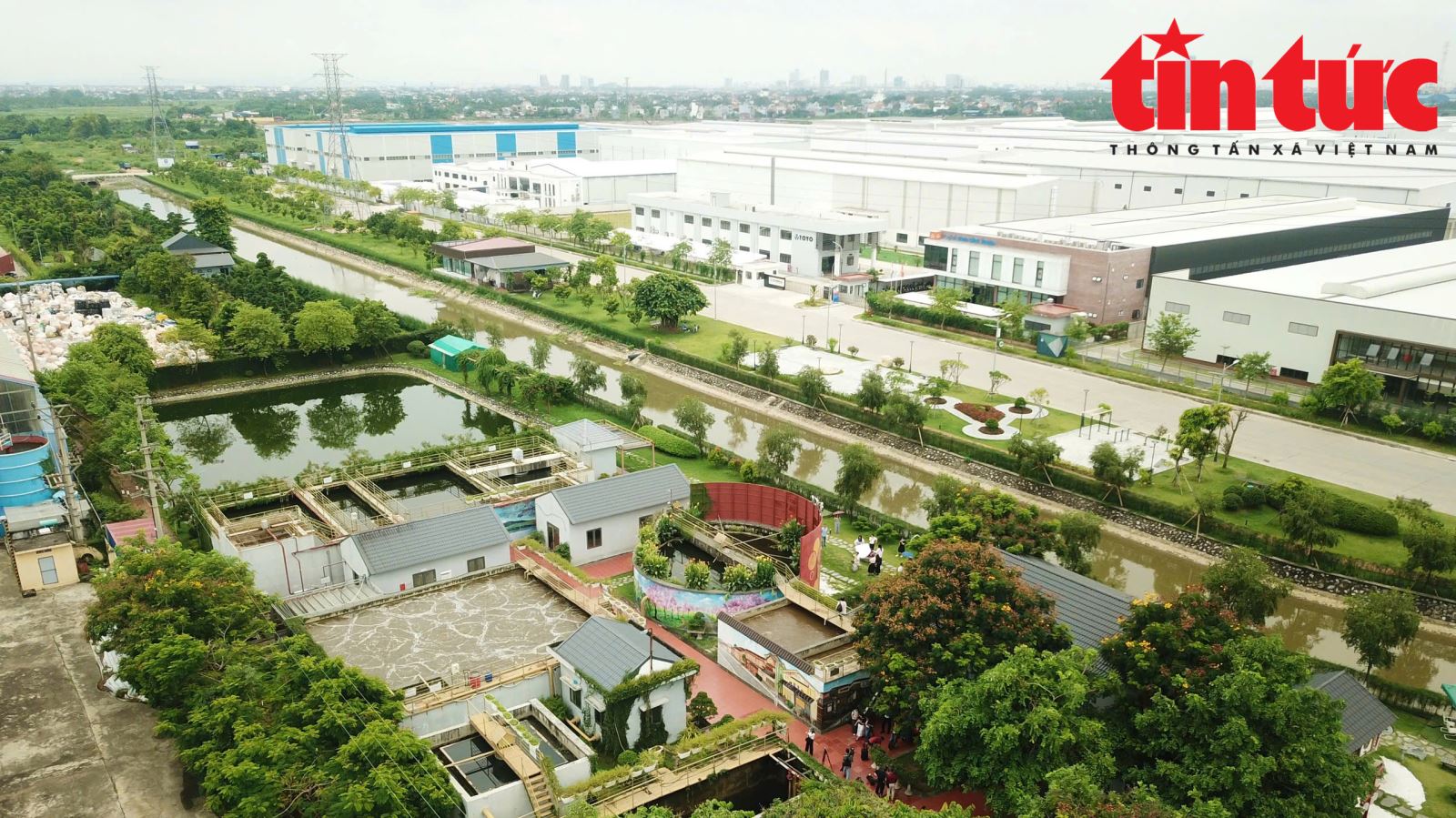

Nam Cau Kien Industrial Park in the northern port city of Hai Phong is developed in line with eco-industrial park model (Photo: VNA)

The rapid development of industrial parks in recent times has put great pressure on the living environment of residents, according to Vuong Thi Minh Hieu, Deputy Director General of the Department of Economic Zone Management (DEZM) under the Ministry of Planning and Investment (MPI).

Up to 13% of operating IPs have not built wastewater treatment plants, threatening the health of the surrounding communities, she noted.

Hieu held that sustainable development is no longer a slogan, but has become an inevitable trend that helps enterprises determine their vision and strategic business orientation, thus many localities and IP infrastructure investors consider forming eco-IPs an urgent need to create competitive advantages.

Furthermore, the development of eco-industrial parks and green industrial parks has also become a mandatory requirement to meet green consumption needs and fulfill the commitment at the 26th United Nations Climate Change Conference (COP26) to achieve the goal of net zero emissions by 2050.

By 2030, the country aims for 40-50% of localities to convert existing IPs into eco-IPs and 8-10% of localities have orientations to build eco-IPs right in their plan making.

The Swiss Government has pledged to continue working with the United Nations Industrial Development Organisation (UNIDO) to accompany Vietnam in promoting eco-industrial parks associated with the circular economy in the 2024-2028 period, according to DEZM.

Its project, approved by the MPI in August, replicates the eco-industrial park approach to promote the circular economy in Vietnam and has a total budget of 3.6 million USD, which is sponsored by the Swiss Federal Department of Economic Affairs, Education and Research (EAER). The projected eco-industrial parks are to be transitioned in Hai Phong, Bac Ninh, Dong Nai, Ho Chi Minh City and Long An.

The MPI is coordinating with the World Bank to support the construction of eco-IPs in Binh Duong, carry out water circulation networks for several industrial parks with a high concentration of textile and garment activities in Hung Yen and Thua Thien Hue. The goal is to promote the efficient use of energy in the eco-IPs following the Korean model.

Bruno Jaspaert, Executive Director of the Deep C Industrial Park in Hai Phong, said Vietnam does not have preferential policies specifically for developing eco-IPs, thus it will take time and efforts to build these zones.

The research and development of the Law on Industrial Parks and Economic Zones to ensure the enhancement of international competitiveness of industrial park and economic zone models is one of the key tasks that the MPI will implement together with other ministries, agencies, and localities in the coming time, Hieu said.

According to her, IPs must pioneer changing the direction of development, focusing on promoting the development of eco and green industrial park models. Science, technology, and innovation should be considered a pillar for future development. Focus should be placed on attracting selective investment, and proactively contacting and closely following the world’s leading corporations in the industries and fields that Vietnam prioritises./.

(VNA)

TỪ KHÓA:eco industrial parksgreen industrial parks
Bài trước Đường cao tốc trên cao ĐBSCL, một đề xuất đáng tham khảo
Bài tiếp Chuyện cái nhà vệ sinh ở điểm đến hàng đầu Đông Nam Á
Bình luận Bình luận

Bình luận Hủy

Bạn phải đăng nhập để gửi bình luận.

Ad imageAd image

Mới cập nhật

Trung Quốc: Lộ trình chuyển đổi năng lượng xanh đến 2030
Năng lượng - Môi trường 26/03/2026
Đồng Nai dành hơn 800ha đất phát triển nhà ở xã hội đến năm 2030
Tin trong nước 26/03/2026
Ngành Xây dựng đặt mục tiêu tăng trưởng 14,5%/năm, đô thị hóa vượt 50%
Tin trong nước 26/03/2026
Tiềm năng phát triển đô thị định hướng TOD tại các trung tâm giao thông ở Hà Nội
Quy hoạch đô thị 25/03/2026
Khi thiết kế là bản tuyên ngôn cho gỗ quý
Thiết kế / Sáng tạo 24/03/2026
Điều gì đang đẩy lãi suất vay mua nhà đi lên?
Bất động sản 24/03/2026
Nhiệm vụ quy hoạch đô thị Khánh Hòa đến năm 2050: Tập trung rà soát các căn cứ pháp lý
Tin trong nước 24/03/2026
Dự kiến sửa đổi điều kiện về thu nhập của người mua nhà ở xã hội
Bất động sản 23/03/2026
Cần Thơ định hình “siêu đô thị Mekong”, tạo cực tăng trưởng mới phía Nam
Kinh tế / Pháp luật 23/03/2026
Thi tuyển phương án kiến trúc cầu Thủ Thiêm 4 (TPHCM)
Tin trong nước 23/03/2026
- Advertisement -
Ad imageAd image
© 2000-2025 Ashui.com. All Rights Reserved.
Welcome back!

Sign in to your account

Username hoặc Email của bạn
Mật khẩu

Quên mật khẩu?