
Recently, more companies have tried to occupy land lots for developing projects. Jeremy King, executive director of Knight Frank Vietnam, shared his views on the last upbeats of residential segment in Ho Chi Minh City.
What is your opinion about the land for residential real estate in Vietnam. Is it limited?
 Many companies in Vietnam have built up residential land banks over the years. The total land bank is extensive. However, much of the land has been allocated to companies that are yet to compensate existing land owners and pay conversion fees. Therefore, the land that is fully approved with compensation and conversion fees paid is currently significantly less than the total area allocated for future use.
Investors can access the land bank by way of joint venture, business cooperation contract or by other means. However in many cases the investor is asked to input funds into projects where compensation is incomplete and no “red book” or land use right certificate covering the whole project is available as security. This causes increased risk and concern for many investors who do not feel safe investing without some form of land ownership in hand.
Can you explain why there is a lot of the valuable land, so called ‘golden land’ in Vietnam still vacant? Is this because of capital problems or difficulties in the government system?
In 2007 Vietnam and the world experienced a once in a generation property “boom”. Foreign investors from all over the world as well as local investors, searched for opportunities. Many companies had great interest in the “golden land” of Ho Chi Minh City but very few deals were actually done.
There are a number of possible reasons for this lack of transactions. Firstly, land prices in Ho Chi Minh City and Hanoi are more expensive than some capital cities in America, Europe and Australasia. Many international investors saw better deals in other developing markets such as South America and Eastern Europe.
Secondly, the market mechanism whereby supply and demand determine price does not necessarily apply to some land in Ho Chi Minh City. Supply is limited and the seller does not really need or want to sell. Thus, prices can remain very high.
Thirdly, some investors have suggested that “red tape” can make deals difficult.
Lastly, compensation issues in relation to certain sites make development time frames very uncertain. Many foreign investors cannot accept this time risk.
Regarding the real estate development plan creating a modern, contemporary and harmonious urban in Ho Chi Minh City do you think the real estate market is in step with the plans?
There are a number of urban planning issues that impact upon Ho Chi Minh City. A number of plans for the city have been completed. Adherence to the plan will be beneficial to the whole city.
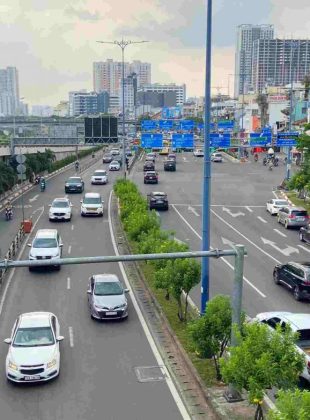
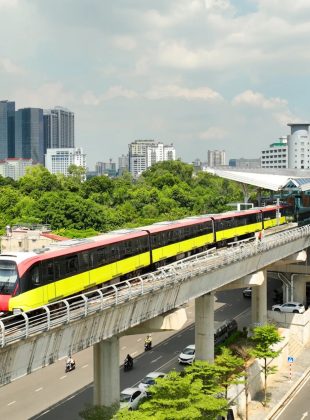
The most obvious urban planning issue is traffic congestion and transport systems. A number of major transport works including new highways, bridges/tunnels and the metro will improve the system.
However, as with many cities of the world where there is a growing population, transport systems can lag behind the community’s needs.
Future population density should be concentrated and supported by strong transport systems and real estate development needs to correlate with this objective. The market can determine the price of property along the transport routes and surrounding the transport nodes.
In order to develop a stable real estate market, it is very essential to meet the real demand of the people. However, speculation always exists in real estate market in Vietnam in general and Ho Chi Minh City in particular. In your opinion, where will the real estate boat head to? What can the government do to deal with this issue?
There is always speculation in every market. However, in the property market real demand over the long term is driven by owner occupiers and investors. By investors we mean those who buy to rent and receive a return on their investment. Demand really comes from those who wish to live in the property as either an owner or a tenant.
Currently in Ho Chi Minh City housing density is quite high. This is a function of affordability in terms of both household income and the price of accommodation. As incomes grow there will continue to be demand for new housing. This demand will underpin the residential property market in the longer term.There will also be growing decentralisation to more affordable locations on the fringe of the city or adjoining provinces. Overall, we are of the opinion that the residential market in Ho Chi Minh City is near the low point in the cycle but the recovery is dependant upon many economic factors including inflation and interest rates. No one can be a captain of a market where the forces of supply and demand determine price and the allocation of resources.
(VIR)