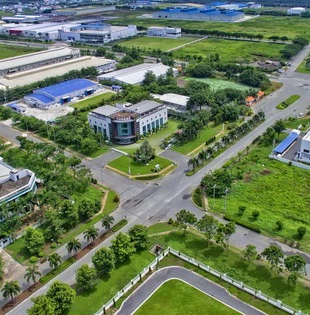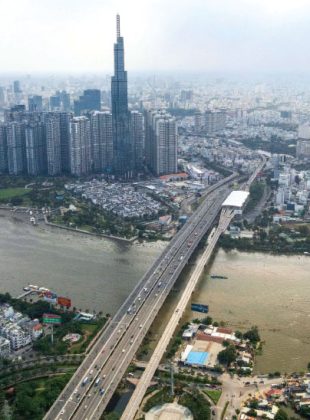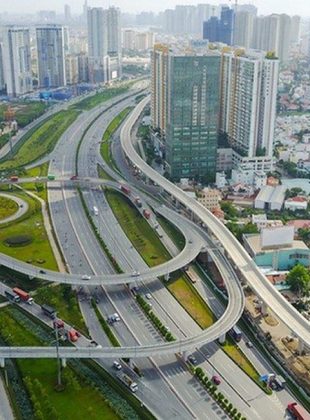


The contrast in Vietnam highlights a clear paradox: while domestic capacity has expanded rapidly, access to international construction markets remains constrained.
The contrast in Vietnam highlights a clear paradox: while domestic capacity has expanded rapidly, access to international construction markets remains constrained.
Beyond Vietnam, however, the global construction market presents a greatly different picture. Valued at over $13.5 trillion annually, it is projected to reach $20 trillion by the late 2030s and around $40 trillion by 2045. These opportunities span Southeast Asia, Australia, North America, Europe, Africa and the Middle East. If Vietnamese enterprises do not move decisively, this market will be captured by competitors, much as South Korea, Japan and China did decades ago through their construction champions.
The bottlenecks keeping firms outside global markets
From over 30 years of experience in the construction sector, three core delays continue to hold Vietnamese companies back at the threshold of international expansion.
First, human resources still fall short of international standards. Vietnam has more than 9,000 construction engineers per million people, around three times the global average. This is a significant advantage in quantity, but not yet in quality. Many engineers and skilled workers internationally lack recognised licences, sufficient foreign language proficiency and experience with global construction standards and site discipline.
In recent years, labour export has largely taken the form of fragmented participation, with Vietnamese engineers working for foreign firms in individual roles. While this generates remittances, it contributes little to national branding or the development of Vietnamese general contracting capacity abroad.
Second, value chains and physical capacity are not yet aligned with environmental, social, and governance (ESG) requirements. ESG standards and carbon emissions have become a mandatory entry condition for the global construction and building materials sectors. Markets such as Australia, the US, Europe, the Middle East and Africa increasingly require green certifications for materials, lifecycle assessments, BIM-based design and construction, and robust ESG governance.
Without recognised certifications and low-emission construction methods, Vietnamese contractors are often excluded at the pre-qualification stage, regardless of price competitiveness.
Third, there is a lack of financial mechanisms and credit guarantees. International general contracting requires strong financial backing, including bid bonds, performance guarantees and advance-payment guarantees issued by globally credible banks. Japanese, Korean and Chinese contractors benefit from extensive state-backed support through export-import banks, credit guarantee funds and development finance institutions.
Vietnamese firms, by contrast, largely operate without such support. As a result, many failures to meet financial pre-qualification requirements before they can demonstrate their technical capabilities.
National strategy essential
International experience shows that no construction enterprise becomes globally competitive without a deliberate and sustained national strategy. The rise of Hyundai in South Korea, major Japanese construction groups, and Chinese conglomerates across Asia and Africa all reflect coordinated state support.
Vietnam, therefore, needs a national master plan for overseas expansion of its construction and building materials industries, built on three pillars: human capital, physical capacity and financial capacity.
Pillar 1: Human capital – a long-term investment that must start now
To develop regional and global general contractors, Vietnam must prepare construction skills from the ground up. This includes issuing national vocational standards aligned with international benchmarks; organising professional examinations and licences recognised in key markets such as Australia, the US, Southeast Asia and the Middle East; and implementing a 10-year national foreign language training programme tailored to priority markets.
In parallel, an International Construction Academy should be established through cooperation among government agencies, universities, professional associations and leading enterprises to train a core workforce for exporting construction services.
Human capital takes the longest time to develop and therefore requires immediate action.
Pillar 2: Physical capacity, green standards as a passport to global markets
Vietnamese contractors cannot compete internationally using domestic standards alone. A national framework for green construction and green building materials, harmonised with European, Australian and US standards, is essential.
Enterprises should be supported in adopting BIM, lifecycle assessment and ESG management systems. Tax incentives can encourage investment in green and energy-efficient building materials, while targeted support should help firms obtain international certifications.
Vietnam’s building materials already reach more than 40 countries, including architectural glass, tiles and sanitary ware. Systematic upgrading to ESG standards will unlock significantly further export growth.
Pillar 3: Financial capacity – a national credit guarantee mechanism
A state-backed Credit Guarantee and Overseas Contractor Support Fund is a precondition for sustainable international competition. Such a fund could issue bid bonds and performance guarantees, provide concessional financing for overseas market entry, and act as a bridge between Vietnamese banks and international financial institutions.
With credible guarantees, Vietnamese contractors will be far better positioned to compete with established players from Japan, South Korea, China and the Middle East.
Immediate actions
Several practical steps could be taken without delay. First, the government should support pilot overseas projects for Vietnamese firms, prioritising accessible markets such as Laos, Cambodia, the Philippines, parts of Africa and the Middle East. Reference projects are critical for opening new markets.
Second, in outward development assistance programmes, Vietnamese general contractors should be prioritised where capacity allows, an approach widely used to build national champions elsewhere.
Third, a coordinated national branding strategy should promote Vietnam’s construction industry through embassies, trade offices and professional networks in major markets.
Finally, Vietnam should identify and concentrate support on 5-10 strategic national general contractors, rather than spreading resources too thinly. Strong lead enterprises can pull the entire sector into global value chains.
Vietnam’s demographic advantage will last only another 10-15 years, coinciding with a major restructuring of global supply chains. Without timely action, Vietnam risks missing access to a $40 trillion market, losing competitive advantage and remaining confined to a saturated domestic space.
If action is taken now, construction can become a core pillar of the economy, creating high-value jobs, boosting GDP and projecting the Vietnamese brand onto landmark projects worldwide.
Vietnam does not lack capability or ambition. What is needed is a strong, sustained and decisive national strategy to convert potential into reality. With alignment among government, enterprises, banks and training institutions, Vietnamese general contractors can become active players in the global construction market within the next two decades, strengthening not only the industry but Vietnam’s standing in an increasingly integrated world.
Jerry Nguyen (Nguyen Kinh Luan)