
By using this site, you agree to the Privacy Policy and Terms of Use.
Accept
Ashui.comAshui.comAshui.com
  • Home
    • Bookmarks
    • English
      • News
      • Projects
      • Products
    • Ashui Awards
    • Giới thiệu
    • Quảng cáo / PR
    • Liên hệ
  • Tin tức / Sự kiện
    • Tin trong nước
    • Tin thế giới
    • Sự kiện
    Tin tức / Sự kiệnĐọc tiếp
    Ban hành Kế hoạch triển khai thi hành Luật Quy hoạch
    Tạp chí Xây dựng 28/01/2026
    Hà Nội tính di dời 860.000 dân để tái cấu trúc đô thị
    KTSG Online 28/01/2026
    Lễ trao giải Ashui Awards 2025 (lần thứ 14)
    Ashui.com 26/01/2026
    Việt Nam – Nhật Bản tăng cường trao đổi kinh nghiệm thoát nước, xử lý nước thải
    Báo Xây dựng 24/01/2026
    Chuỗi sự kiện ra mắt dự án “GRAYSCALE VN – Kiến trúc sương mù”
    Ashui.com 23/01/2026
  • Chuyên mục
    • Kiến trúc
    • Nội – ngoại thất
    • Quy hoạch đô thị
    • Bất động sản
    • Năng lượng – Môi trường
    • Phong thủy
  • Công nghệ
    • Công nghệ mới
    • Giải pháp
    • Xu hướng
    • Ứng dụng
  • Vật liệu / Thiết bị
    • Vật liệu xây dựng
    • Trang thiết bị
    • Trang trí nội ngoại thất
    • Thị trường
  • Dự án
    • Giới thiệu dự án
    • Tư vấn thiết kế
    • Kinh tế / Pháp luật
  • Tương tác
    • Chuyên đề
    • Góc nhìn
    • Phản biện
    • Đối thoại
    • Q&A
    • Điểm đến
    • Nhìn ra thế giới
  • Cộng đồng
    • Kiến trúc sư
    • Kỹ sư
    • Thiết kế / Sáng tạo
    • Sinh viên
    • Tuyển dụng
    • Ashui Awards Tour
    • CLB Điện ảnh Kiến trúc
    • CLB Kiến trúc Xanh TPHCM
Font ResizerAa
Ashui.comAshui.com
Font ResizerAa
  • Home
  • Tin tức / Sự kiện
  • Chuyên mục
  • Công nghệ
  • Vật liệu / Thiết bị
  • Dự án
  • Tương tác
  • Cộng đồng
  • Home
    • Bookmarks
    • English
    • Ashui Awards
    • Giới thiệu
    • Quảng cáo / PR
    • Liên hệ
  • Tin tức / Sự kiện
    • Tin trong nước
    • Tin thế giới
    • Sự kiện
  • Chuyên mục
    • Kiến trúc
    • Nội – ngoại thất
    • Quy hoạch đô thị
    • Bất động sản
    • Năng lượng – Môi trường
    • Phong thủy
  • Công nghệ
    • Công nghệ mới
    • Giải pháp
    • Xu hướng
    • Ứng dụng
  • Vật liệu / Thiết bị
    • Vật liệu xây dựng
    • Trang thiết bị
    • Trang trí nội ngoại thất
    • Thị trường
  • Dự án
    • Giới thiệu dự án
    • Tư vấn thiết kế
    • Kinh tế / Pháp luật
  • Tương tác
    • Chuyên đề
    • Góc nhìn
    • Phản biện
    • Đối thoại
    • Q&A
    • Điểm đến
    • Nhìn ra thế giới
  • Cộng đồng
    • Kiến trúc sư
    • Kỹ sư
    • Thiết kế / Sáng tạo
    • Sinh viên
    • Tuyển dụng
    • Ashui Awards Tour
    • CLB Điện ảnh Kiến trúc
    • CLB Kiến trúc Xanh TPHCM
Các kênh mạng xã hội
  • Advertise
© 2000-2025 Ashui.com. All Rights Reserved.
News

A “compass” guiding Hanoi’s urban spatial development

The Hanoi Party Committee’s Program No. 05-CTr/TU for the 2021–2025 period is seen as a “compass” guiding urban spatial development for the capital city.

VnEconomy 19/10/2025
4 phút đọc
SHARE
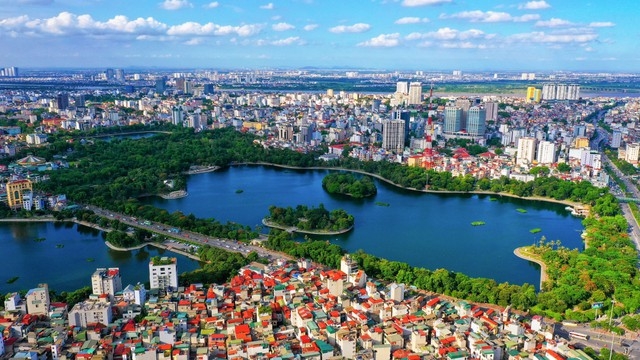
A corner of Hanoi under a bird’s eye view.

Under Program No. 05-CTr/TU, issued by the Hanoi Party Committee for the capital city’s development in  the 2021–2025 period is seen as a “compass” guiding urban spatial development toward sustainability, harmonizing economic growth with environmental protection and the preservation of the capital’s cultural and historical values, the Government News remarked in a story released on October 18.

Since its issuance in 2021, the program has clearly identified its focus on strengthening planning and planning management, viewing it as the foundation for Hanoi’s comprehensive, modern, and sustainable development.

Under the program, the development of underground spaces is considered one of the key breakthroughs.

Chairman of the Hanoi People’s Committee Tran Sy Thanh was quoted by the Government News as saying that the program is not merely an administrative task but a concrete action plan to gradually realize the goal of sustainable development for the capital.

The capital city is also implementing a two-tier local government model, marking a significant shift in organizational structure and administrative decentralization.

Hanoi aims to establish a multifunctional underground system that includes traffic tunnels, technical tunnels, commercial centers, parking facilities, service infrastructure, and underground connections, with a view to expanding the usable land fund, easing pressure on surface infrastructure, and enhancing the city’s resilience to climate change.

Underground constructions can not only help reduce traffic congestion but also support water storage for flood prevention, serve urban living needs, and integrate multiple other functions such as commercial centers, transportation, logistics, and waste treatment.

Meanwhile, Hanoi is accelerating the digitalization of all planning data, moving toward urban management based on a Geographic Information System (GIS) platform. The public disclosure of online planning maps and transparent information enables citizens to easily access data, monitor developments, and report violations.

This transparency and digitalization mark a clear shift from administrative management to smart management, contributing to more effective monitoring, greater openness, and enhanced public trust in urban planning and development.

The implementation of the program however still faces numerous challenges, including the pressure of rapid urbanization, while technical, social, and transportation infrastructure have yet to keep pace with the city’s development speed.

Besides, another challenge lies in the limited investment resources for digitalization and smart city development, especially in maintaining and updating data as well as training highly skilled technical personnel.

Furthermore, climate change, environmental pollution, and the shrinking area of urban green spaces remain pressing issues that must be addressed in parallel with the city’s growth.

During the 2030-2050 period, the capital city will focus on three key pillars.

Firstly, Hanoi will expand green areas, lakes, parks, and ecological corridors; preserve natural rivers and lakes; and promote green transportation and energy-efficient buildings.

Secondly, modernizing infrastructure by developing an integrated underground system, public transport, ring roads, metro networks, and electric charging stations; while accelerating digital transformation and smart governance.

Third, preserving identity and enhancing quality of life by safeguarding historical and cultural values; creating creative spaces, pedestrian zones, and open heritage areas; and encouraging citizen participation in urban management.

The capital city will strengthen public–private partnerships (PPP) to attract social resources for green infrastructure and development projects.

Pham Long
TỪ KHÓA:Hanoi urban developmenturban spatial development
NGUỒN:VnEconomy
Bài trước Để biến công trình xanh từ gánh nặng thành lợi thế
Bài tiếp Thu nhập không theo kịp giá nhà: thị trường cần gì để cân bằng?
Ad imageAd image

Mới cập nhật

Ban hành Kế hoạch triển khai thi hành Luật Quy hoạch
Kinh tế / Pháp luật 28/01/2026
TP.HCM lập Ban Quản lý dự án đầu tư xây dựng các công trình giao thông mới sau hợp nhất
Kinh tế / Pháp luật 28/01/2026
Hà Nội tính di dời 860.000 dân để tái cấu trúc đô thị
Tin trong nước 28/01/2026
Thành phố Hồ Chí Minh: Cơ hội thu hút tín dụng xanh
Góc nhìn 27/01/2026
Cấp phép xây dựng phân cấp mạnh, thêm yêu cầu BIM, thời gian xử lý còn 7–20 ngày
Kinh tế / Pháp luật 27/01/2026
Phát triển đô thị xanh được ưu đãi về tài chính, quỹ đất
Kinh tế / Pháp luật 26/01/2026
Lễ trao giải Ashui Awards 2025 (lần thứ 14)
Sự kiện 26/01/2026
TPHCM cần có một trung tâm hàng hải quốc tế
Góc nhìn 26/01/2026
Bất động sản hưởng lợi từ mô hình TOD
Bất động sản 25/01/2026
Chuyên gia hiến kế “số hóa” để giải bài toán hạ tầng giao thông
Giải pháp 25/01/2026
- Advertisement -
Ad imageAd image
© 2000-2025 Ashui.com. All Rights Reserved.
Welcome back!

Sign in to your account

Username hoặc Email của bạn
Mật khẩu

Quên mật khẩu?