
By using this site, you agree to the Privacy Policy and Terms of Use.
Accept
Ashui.comAshui.comAshui.com
  • Home
    • Bookmarks
    • English
      • News
      • Projects
      • Products
    • Ashui Awards
    • Giới thiệu
    • Quảng cáo / PR
    • Liên hệ
  • Tin tức / Sự kiện
    • Tin trong nước
    • Tin thế giới
    • Sự kiện
    Tin tức / Sự kiệnĐọc tiếp
    [Cà phê Net Zero] Xanh hóa ngành Xây dựng từ góc nhìn vật liệu – Thách thức & Giải pháp
    Ashui.com 07/03/2026
    Phát động cuộc thi Genesis Green living Challenge 2026 chủ đề “Urban Pulse – Nhịp đập Đô thị”: Giải bài toán nhà ở xã hội tại đô thị di sản Huế
    Ashui.com 07/03/2026
    Ashui Awards Tour 03/2026 – 1+1>2 Architects
    Ashui.com 07/03/2026
    TPHCM dùng công nghệ GIS đánh số nhà: không thay đổi địa chỉ hiện tại
    KTSG Online 06/03/2026
    Sẽ có khung kỹ thuật thống nhất để vận hành đường sắt đô thị
    Báo Xây dựng 05/03/2026
  • Chuyên mục
    • Kiến trúc
    • Nội – ngoại thất
    • Quy hoạch đô thị
    • Bất động sản
    • Năng lượng – Môi trường
    • Phong thủy
  • Công nghệ
    • Công nghệ mới
    • Giải pháp
    • Xu hướng
    • Ứng dụng
  • Vật liệu / Thiết bị
    • Vật liệu xây dựng
    • Trang thiết bị
    • Trang trí nội ngoại thất
    • Thị trường
  • Dự án
    • Giới thiệu dự án
    • Tư vấn thiết kế
    • Kinh tế / Pháp luật
  • Tương tác
    • Chuyên đề
    • Góc nhìn
    • Phản biện
    • Đối thoại
    • Q&A
    • Điểm đến
    • Nhìn ra thế giới
  • Cộng đồng
    • Kiến trúc sư
    • Kỹ sư
    • Thiết kế / Sáng tạo
    • Sinh viên
    • Tuyển dụng
    • Ashui Awards Tour
    • CLB Điện ảnh Kiến trúc
    • CLB Kiến trúc Xanh TPHCM
Font ResizerAa
Ashui.comAshui.com
Font ResizerAa
  • Home
  • Tin tức / Sự kiện
  • Chuyên mục
  • Công nghệ
  • Vật liệu / Thiết bị
  • Dự án
  • Tương tác
  • Cộng đồng
  • Home
    • Bookmarks
    • English
    • Ashui Awards
    • Giới thiệu
    • Quảng cáo / PR
    • Liên hệ
  • Tin tức / Sự kiện
    • Tin trong nước
    • Tin thế giới
    • Sự kiện
  • Chuyên mục
    • Kiến trúc
    • Nội – ngoại thất
    • Quy hoạch đô thị
    • Bất động sản
    • Năng lượng – Môi trường
    • Phong thủy
  • Công nghệ
    • Công nghệ mới
    • Giải pháp
    • Xu hướng
    • Ứng dụng
  • Vật liệu / Thiết bị
    • Vật liệu xây dựng
    • Trang thiết bị
    • Trang trí nội ngoại thất
    • Thị trường
  • Dự án
    • Giới thiệu dự án
    • Tư vấn thiết kế
    • Kinh tế / Pháp luật
  • Tương tác
    • Chuyên đề
    • Góc nhìn
    • Phản biện
    • Đối thoại
    • Q&A
    • Điểm đến
    • Nhìn ra thế giới
  • Cộng đồng
    • Kiến trúc sư
    • Kỹ sư
    • Thiết kế / Sáng tạo
    • Sinh viên
    • Tuyển dụng
    • Ashui Awards Tour
    • CLB Điện ảnh Kiến trúc
    • CLB Kiến trúc Xanh TPHCM
Các kênh mạng xã hội
  • Advertise
© 2000-2025 Ashui.com. All Rights Reserved.
News

IFC innovative move to help boost climate resilience of buildings in Vietnam

Ashui.com 21/04/2023
4 phút đọc
SHARE

International Finance Corporation, the World Bank’s investment arm, launched its Building Resilience Index (BRI) program in Vietnam on Thursday to help make the country’s buildings and cities more climate resilient.

BRI, an IFC innovation that is the first of its kind globally, also aims at promoting a safe and healthy environment for residents while mitigating the social and financial impacts of natural hazards, the World Bank’s global investor said.
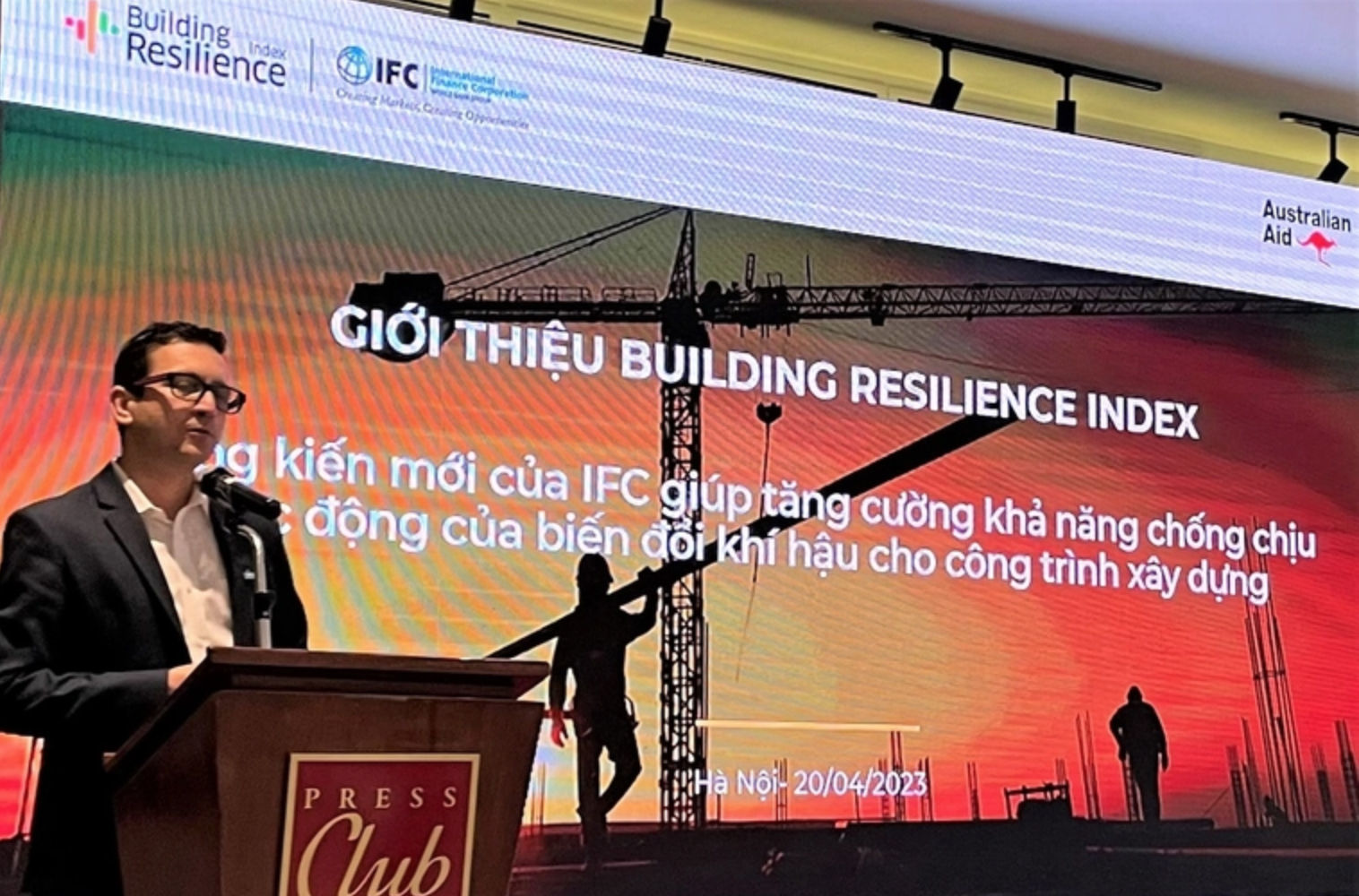

Ommid Saberi, global head for the Building Resilience Index program and global technical head for IFC’s EDGE Green Buildings program, introduces BRI in Hanoi on April 20, 2023. (Photo courtesy of IFC)

A web-based hazard mapping and resilience assessment framework, the BRI evaluates location-specific climate-related risks for real estate projects and the resilience measures which have been implemented. This innovation makes it easy for developers, locators, homebuyers, and other stakeholders to assess, improve, and disclose the resilience of buildings.

“We welcome IFC’s continued efforts in promoting the sustainable development of the building sector in Vietnam,” said Nguyen Cong Thinh, Deputy Director of the Science and Technology Department, Ministry of Construction.

“Integrating sustainable and climate-resilient measures in urban development will help ensure a safe and healthy environment for people to live and work in and avoid losses of residential and industrial assets, and at the same time contribute to the country’s combined resilient and net-zero development path,” he said.

Thomas Jacobs, IFC country manager for Vietnam, Cambodia and Laos, said: “In the face of threats posed by a rapidly changing climate, it’s vital to ensure that buildings are resilient to natural hazards such as cyclones, flooding, fire and landslides, especially in Vietnam’s urban areas, where so many people live.

“By equipping local developers, investors, and policymakers with the Building Resilience Index, we look forward to helping strengthen the country’s climate agenda, promoting a greener, sustainable, and more inclusive economy.”
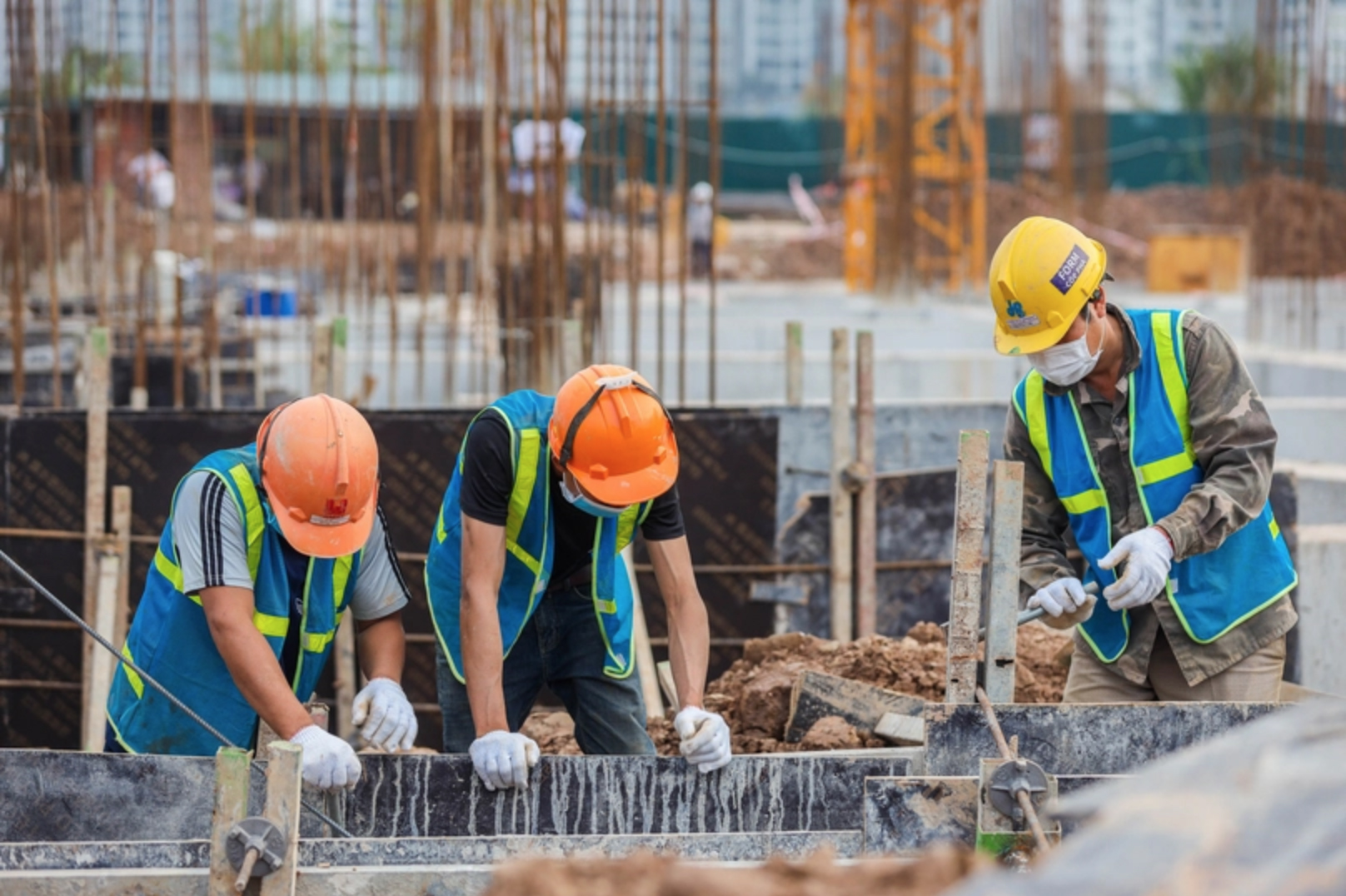

Workers at a construction site in Hanoi, northern Vietnam. (Photo by The Investor/Trong Hieu)

Vietnam is among the countries most vulnerable to climate change, having lost about $10 billion in 2020 (3.2% of its gross domestic product) to climate impacts, according to IFC. Low lying and exposed to natural hazards, about 300 coastal urban areas—providing livelihoods for a growing and rapidly urbanizing population—especially bear the brunt.

With support from the Australian Government, the BRI program in Vietnam has identified and integrated the country’s hazard maps into the BRI app. It will select three pilot projects spanning the residential, office, retail, educational, and hospitality sectors to assess and build resilience.

IFC will also promote the uptake of BRI in the local construction industry by raising awareness and delivering capacity training to building developers and other stakeholders.

The BRI initiative was launched in 2020 with the Philippines as the pilot country. Within a year and a half, 1.8 million square meters of gross floor area have been committed to being assessed by BRI for improved climate resilience.

In Vietnam, the BRI program will build on the success of IFC’s green building certification program, Excellence in Design for Greater Efficiencies (EDGE), which has since 2015 helped save $4.1 million in utility costs for 77,000 residents, avoiding 30,000 tons of greenhouse-gas emissions annually.

Thuy Tuong

(TheInvestor.vn)

TỪ KHÓA:Building Resilience IndexInternational Finance Corporation
Bài trước Nhà cộng đồng Kỳ Thượng / thiết kế: HGAA
Bài tiếp Thế giới đối mặt nhiệt độ cao kỷ lục trong năm nay khi El Nino quay trở lại
Bình luận Bình luận

Bình luận Hủy

Bạn phải đăng nhập để gửi bình luận.

Ad imageAd image

Mới cập nhật

[Cà phê Net Zero] Xanh hóa ngành Xây dựng từ góc nhìn vật liệu – Thách thức & Giải pháp
Sự kiện 07/03/2026
Phát động cuộc thi Genesis Green living Challenge 2026 chủ đề “Urban Pulse – Nhịp đập Đô thị”: Giải bài toán nhà ở xã hội tại đô thị di sản Huế
Tin trong nước 07/03/2026
Ashui Awards Tour 03/2026 – 1+1>2 Architects
Ashui Awards Tour 07/03/2026
Lotus Clubhouse / thiết kế: MIA Design Studio
Tư vấn thiết kế 06/03/2026
Chinh phục 25 tỷ USD: Ngành gỗ Việt Nam cần chuyển đổi sang bền vững
Góc nhìn 06/03/2026
TPHCM dùng công nghệ GIS đánh số nhà: không thay đổi địa chỉ hiện tại
Tin trong nước 06/03/2026
Sẽ có khung kỹ thuật thống nhất để vận hành đường sắt đô thị
Tin trong nước 05/03/2026
Nhà ở xã hội và nhà ở thương mại giá phù hợp: Khác nhau ở đâu?
Bất động sản 05/03/2026
Phát triển công trình hầm kỹ thuật đa tiện ích tại các đô thị ở Việt Nam
Giải pháp 04/03/2026
ADB mong muốn hỗ trợ vốn cho phát triển hạ tầng xây dựng, giao thông tại Việt Nam
Tin trong nước 04/03/2026
- Advertisement -
Ad imageAd image
© 2000-2025 Ashui.com. All Rights Reserved.
Welcome back!

Sign in to your account

Username hoặc Email của bạn
Mật khẩu

Quên mật khẩu?