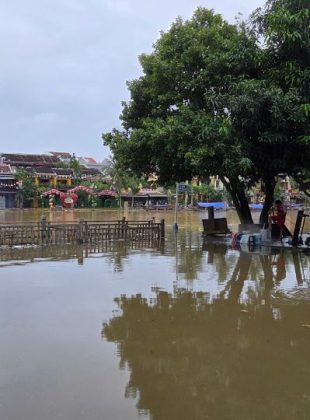

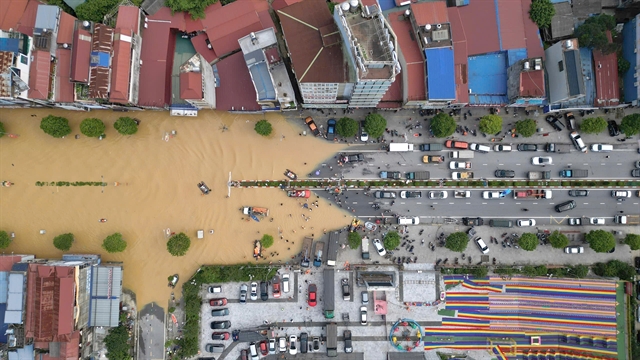
From January to November 2025, Việt Nam endured a relentless chain of storms, floods and landslides, causing more than VNĐ85 trillion (US$3.22 billion) in damage.
The intensity of these disasters, many historically unprecedented, has laid bare the limits of current prevention and forecasting systems and underscored the urgent need for stronger climate resilience.
Immediate disaster response and recovery, infrastructure reinforcement and planning reform, and the modernisation of forecasting and early warning systems have become the country’s most urgent priorities.
No previous year has witnessed the frequency and intensity of natural disasters seen in 2025. According to the Department of Dyke Management and Natural Disaster Prevention and Control under the Ministry of Agriculture and Environment (MAE), as of November 24, the East Sea had recorded 21 storms and tropical depressions. Three of them, including Typhoons Kajiki, Bualoi and Kalmaegi, were so powerful that the Prime Minister was compelled to activate a forward command for flood and storm relief operations to better coordinate emergency response.
Extreme rainfall occurred across a vast area, pushing 13 major rivers from the northern to the central regions above historic flood levels. Urban centres from Hà Giang and Thái Nguyên to Bắc Ninh, Huế, Đà Nẵng, Khánh Hòa and the Central Highlands provinces of Gia Lai and Đắk Lắk were submerged under deep floodwaters.

Mounting pressure
Several localities were struck by successive storms, floods, flash floods and landslides within short intervals – a phenomenon experts describe as “compound disasters”. These events proved especially dangerous in the northern mountainous and midland regions and throughout the central region, where they threatened the integrity of disaster-prevention structures, transport and telecommunications systems, electricity grids and crucial dyke and reservoir networks.
The mid-November floods in south-central Việt Nam were described as “beyond all historical records”. Several weather stations measured 1,000–1,200 mm of rainfall in just a few days. These were levels the World Meteorological Organization classifies as extremely rare and nearly impossible to forecast with precision.
Historic floods appeared simultaneously on three to five river basins. This was an event almost unprecedented in more than half a century of monitoring.
Flash floods and landslides intensified under the combined effects of climate change, extreme rainfall and other abnormal weather systems. Vulnerable regions across the Central and the Central Highlands regions experienced widespread infrastructure damage, prolonged isolation and severe losses.
As Typhoon Kalmaegi, the 15th storm approached late in the year, the already battered south-central coast faced yet another blow. This succession of crises underscores a profound shift in regional climate dynamics, placing Việt Nam squarely in the centre of an escalating cycle of extreme weather.
Despite meaningful improvements in disaster prevention over recent years, the 2025 floods once again revealed major gaps in Việt Nam’s forecasting and response capabilities.

Systemic weaknesses
Report from the MAE in October acknowledged that forecasting of extreme rainfall and record-breaking floods remained slow and insufficient. Many areas did not receive timely warnings, and existing disaster-prevention infrastructure was not designed for worst-case scenarios.
During a meeting the same month on the aftermath of Typhoon Matmo and subsequent flooding, Prime Minister Phạm Minh Chính urged the meteorological sector to provide “the earliest, fullest and most accurate forecasts possible” and to strengthen collaboration with international forecasting centres.
Experts emphasised that in an era of increasing uncertainty, Việt Nam needs a real-time, cross-sectoral forecasting and early warning system.
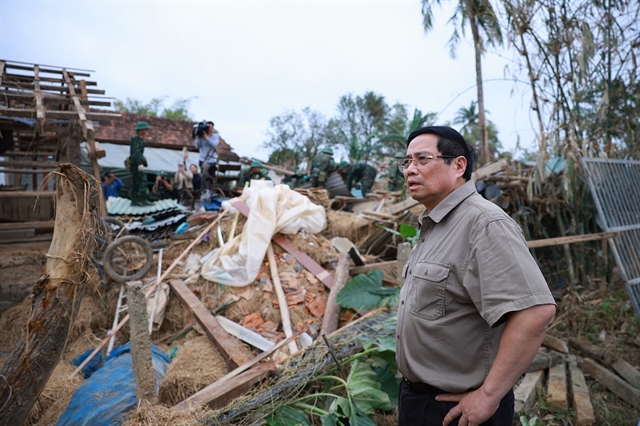
According to Bùi Thị Phượng of the Việt Nam Greenhouse Gas Partnership improved forecasting requires substantial investment in digital transformation, data standardisation, smart sensor networks, satellite imagery and multi-platform information systems to ensure timely access to warnings even in remote areas.
At the same time, rescue capacity and emergency equipment remain insufficient in many locations. Small hydropower reservoirs in some localities lack adequate monitoring, and shortcomings in the coordinated operation of multi-reservoir systems have at times led to sudden water releases, endangering downstream communities.
Investment levels in disaster-prevention infrastructure, including dykes, reservoirs, forecasting systems, public facilities and housing, still fall short of the resilience needed to withstand increasingly destructive storms and floods.
A World Bank report titled “Việt Nam 2045: Growing Greener“, released in July, also warned that the country must shift from a model of “coping” to one of “proactive adaptation”, expanding investment in resilient infrastructure and upgrading early warning systems to meet new climate realities.
A national imperative
Responding to natural disasters and climate change has now become an urgent national mission. From dawn emergency meetings to international forums, Prime Minister Chính has remained consistent in placing people at the centre of all action.
Concluding an emergency online meeting on flood recovery during a visit to South Africa, PM Chính stressed, “People need us most in times of hardship.” This people-first approach now underpins every directive on disaster response and long-term climate adaptation.
Việt Nam’s priority actions fall into three major areas: immediate response and post-disaster recovery, infrastructure reinforcement and planning reform, and the modernisation of forecasting and early warning systems.
To address immediate needs and accelerate recovery, the Government on November 25 outlined urgent measures such as emergency support to heavily affected central provinces, restructuring production and relocating communities in high-risk areas, restoring essential infrastructure and strengthening resilience to safeguard economic growth.

During a meeting the following day on preparations for Typhoon Koto, Deputy Prime Minister Trần Hồng Hà instructed ministries and localities to analyse the causes of flash floods and landslides, working closely with scientific institutions in hydrology, meteorology and water resource management to improve risk assessment and reduce harm to local communities.
He particularly emphasised the need to update flood and flash-flood maps for all provinces, calling them “core tools for developing future response scenarios”.
To reinforce infrastructure and improve planning, Deputy Minister Nguyễn Hoàng Hiệp of the MAE stated that structural upgrades must be carried out more decisively. The ministry would review and update dyke and flood-control plans; tighten management over riverbed, bank and floodplain exploitation; and streamline the command system for flood prevention.
Priority investment would be directed toward urgent upgrades of vulnerable dykes and reservoirs to reduce risks amid increasingly erratic rainfall.
Science and technology are emerging as indispensable tools for more accurate predictions and timely warnings. Deputy Minister Lê Công Thành stressed that as climate impacts become more pronounced and disasters intensify, scientific and technological innovation would be key to forecasting, prevention and risk reduction. Effective early warnings, he said, were essential not only to protect lives but also to support sustainable livelihoods.
According to Nguyễn Thượng Hiền, director general of the Meteorological and Hydrological Administration, the sector is modernising rapidly.
Priorities include upgrading meteorological, hydrological and marine observation networks; expanding weather and coastal radar systems; integrating satellite imagery; and applying artificial intelligence to forecast storms, extreme rainfall, flash floods, and other atypical hazards.
The sector is also enhancing international cooperation to share data, acquire advanced forecasting technologies and refine early-warning procedures.
According to experts, Việt Nam is accelerating early-warning projects in mountainous and midland regions, which face the most severe impacts. These efforts are not merely technical tasks but essential measures to protect communities and support sustainable national development.
In an era of mounting climate pressure, strengthening the forecasting and early-warning system is both a life-saving mission and a long-term development strategy.
(VNS)