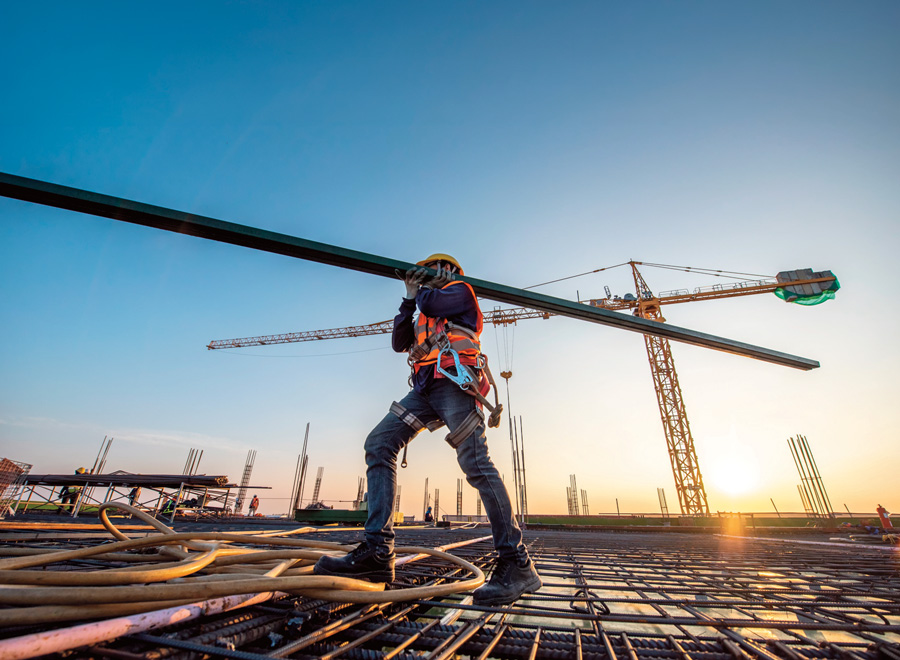
Amid mounting pressure to decarbonize, the construction industry – broadly defined as including real estate, infrastructure, and building materials – accounts for some 17 per cent of Vietnam’s GDP and is projected to have grown by nearly 9 per cent in 2025, according to the socio-economic report from the National Statistics Office at the Ministry of Finance. This places the sector at the center of the country’s transition, requiring a fundamental transformation from materials and design to construction and operations.
Notably, international experts estimate that about 25 per cent of global steel production is currently used solely to replace corroded components, highlighting significant potential to cut emissions through improved design and material optimization.
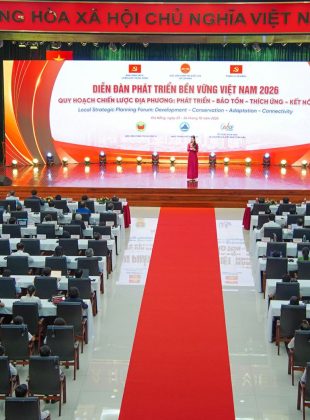
At the “Build to Last 2026” annual construction conference, on April 7, experts stressed that green transformation in construction goes beyond the adoption of environmentally-friendly materials. Instead, it requires a holistic approach, starting from design thinking and integrating technology and data to address performance, cost, and emissions across the entire lifecycle of a project.
Barriers & recommendations
According to Mr. Nguyen Truong Hai, CEO of Saint-Gobain Vietnam, building materials play a foundational role in this transition. Prioritizing local and energy-efficient materials from the design stage can reduce emissions while shaping green buildings from the outset. This requires optimization across the entire value chain, from material production to application, contributing to the development of sustainable urban ecosystems.
However, Mr. Nour-Eddine Mesbah, Project Director at VINCI Construction, argued that the challenge lies not only in material selection but also in how materials are used and optimized. He noted that improving design and maintenance could significantly reduce steel consumption, thereby lowering both resource use and energy demand. “Net-zero cannot be achieved with construction methods from 20 years ago,” he emphasized.
He identified three key barriers to scaling low-carbon materials in Vietnam: supply, as manufacturers need to integrate sustainability into their products; standards, as Vietnam must develop technical frameworks to accommodate new materials; and risk, as the industry must become more open to experimentation and innovation.
While solutions such as low-carbon asphalt and recycled materials are already available, wider adoption will require coordinated efforts across the ecosystem. This includes collaboration between government agencies, businesses, and research institutions to establish standards, promote innovation, and share risks.
Mr. Mesbah also highlighted the importance of investor commitment in embracing innovation, including the adoption of proven but not yet widely used materials and technologies. Optimizing design and material management is critical to reducing embodied carbon. Rather than focusing solely on materials, companies should adopt a comprehensive approach spanning design, construction, and operation.
Maintenance is key to extending asset lifespan and preserving value. In the energy sector, many countries are exploring ways to extend asset lifetimes by 10 to 20 years through preventive measures and upgrades, reflecting a broader shift toward sustainable investment philosophies.
Citing a 720 MW power plant project in Vietnam, Mr. Boris Vivares, Group General Director at Vivablast, noted that the facility maintained 99.9 per cent operational efficiency over 20 years, demonstrating the value of long-term asset optimization. “It all comes down to understanding the asset lifecycle and optimizing each stage,” he said.
Role of technology and data
The construction sector operates as a complex ecosystem involving multiple stakeholders, yet it has lagged behind in digital transformation. Experts noted that smart management systems and automation are essential to optimize energy use and operational performance. Planning, material selection, and construction processes must be aligned, with technology and management systems enabling end-to-end optimization.
Mr. Charlélie Michaud, CEO of Polaris Edge, highlighted the role of data management systems in tracking materials and emissions, optimizing energy performance, and enhancing supply chain transparency. AI can further support the digitalization of the entire ecosystem, from design and operations to environmental planning. However, fragmented solutions remain a major challenge. “One of the biggest issues with digitalization is that solutions are often fragmented,” he said. “What is needed is an integrated approach capable of addressing broader challenges such as environmental impact.”
At the same time, AI itself is creating new challenges, particularly the growing demand for data centers with large-scale and highly-efficient cooling systems. According to Mr. Thai Hoang Quynh, Power and Grid Sales Director at Schneider Electric Vietnam and Cambodia, the world is entering an “era of smart energy and industry,” where AI is both a driver and a challenge for energy systems. “AI is becoming one of the main drivers of global energy demand at an unprecedented scale,” he said.
However, AI also plays a critical role in transforming energy systems. It enables the transition from centralized, one-way grids to flexible, multi-directional networks capable of real-time optimization. Estimates suggest that, by 2050, AI could help save around 12,000 TWh of electricity, reduce costs by nearly $500 billion, and significantly cut greenhouse gas emissions annually. This highlights AI’s dual role as both a source of demand and a key enabler of energy efficiency.
Experts agreed that reducing carbon emissions in construction must begin at the design stage, supported by optimized structural systems and intelligent management tools, including AI, to improve real-time cost and energy efficiency.
Four priorities for urban development toward 2040 stand out: prioritizing low-emission criteria in material selection; investing in human resources and technology transfer; accelerating digitalization and data sharing; and strengthening collaboration across the value chain. Together, these will be critical for Vietnam to achieve sustainable urban development while maintaining economic growth in the years ahead.
Infrastructure as the bigger picture
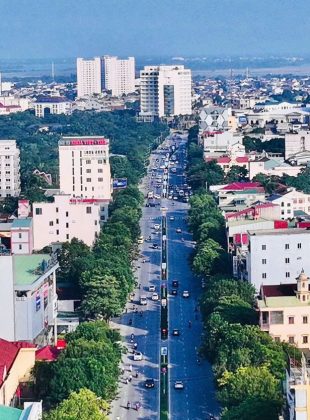
As a wave of major projects gets underway, including the North-South high-speed railway, seaports, and industrial parks, infrastructure is increasingly viewed as a key driver of economic growth and international integration in Vietnam. However, the challenge goes beyond physical infrastructure.
Addressing current challenges, Mr. Bruno Jaspaert, CEO of Deep C Industrial Zones Vietnam, said the country must reposition itself to remain competitive amid global uncertainties. “The challenge is not just about building more infrastructure, but about ensuring that the system operates more efficiently in the future,” he said. This requires stronger digitalization, diversified operating models, and preparation for the transition toward clean energy.
Industrial parks must go beyond expansion, integrating technology, building digital platforms, and moving toward greener development models. “We need to prepare now for the next 10 to 15 years, with electrification, renewable energy, and digital ecosystems,” Mr. Jaspaert added.
From a technical perspective, Mr. Eric Gratton, General Director of Artelia Vietnam, said the country is entering a new wave of infrastructure investment, particularly in large-scale transport projects. He noted that Artelia is currently involved in studying the high-speed railway project; a completely new field for Vietnam. “The biggest challenge is that we are starting almost from scratch, with no established standards or clear legal framework,” he explained.
Implementation will need to proceed step-by-step, from developing standards and defining routes and station locations to selecting technologies and construction solutions. At the same time, there must be a balance between speed – potentially reaching 350 km/h – and the need to serve localities along the route. “This is not only a technical issue, but also a matter of socio-economic development and regional planning,” he said.
Regarding standards, he suggested that adopting European standards could offer advantages in terms of openness and competitiveness. “Open standards allow more contractors to participate, enhancing competition and optimizing costs in the long term,” he believes.
From the perspective of port operations and logistics, Mr. Simon Farhat, CEO of Gemalink, highlighted the growing trend toward greener infrastructure. He cited the example of electric barges, a clean transport solution aimed at reducing emissions in the logistics chain. “This is the result of international cooperation, combining technology, finance, and practical demand in Vietnam,” he said, adding that investment in renewable energy, such as solar power, not only supports more sustainable port operations but also enables the development of environmentally-friendly logistics models.
International capital
From a development finance perspective, Mr. Antoine Le Bihan, Senior Transport Specialist at the French Development Agency (AFD), said international funding is playing an increasingly important role in advancing infrastructure in Vietnam.
He pointed to a €40 million ($47.2 million) support program that acts as a “lever” to mobilize billions of euros in additional investment from European financial institutions. The program not only provides funding but also supports project preparation, financial structuring, risk allocation, and overall feasibility. “We not only provide financing but also support project design to ensure a balance between economic efficiency and environmental and social standards,” he said. High standards for low emissions, green technologies, and accessibility are integrated from the outset.
Speakers also discussed Vietnam’s opportunities amid global supply chain shifts. However, to capitalize on these, the country must strengthen its infrastructure capacity, ensuring connectivity and reliability.
Overall, infrastructure will remain a key driver of Vietnam’s growth. To maximize its impact, however, a coordinated approach is required, spanning planning, finance, technology, and operations. Three priorities were highlighted: accelerating digitalization, adopting international standards, and promoting sustainable development. These will form the foundation for Vietnam not only to connect its cities, but also to integrate more deeply into global value chains in the years ahead.
The challenge lies not only in the selection of low-carbon materials, but also in how these materials are used and optimized.”
- Mr. Nour-Eddine Mesbah – Project Director at VINCI Construction
International funding is playing an increasingly important role in advancing infrastructure in Vietnam.”
- Mr. Antoine Le Bihan – Senior Transport Specialist at the French Development Agency (AFD)
Như Quỳnh