By using this site, you agree to the Privacy Policy and Terms of Use.
Accept
Ashui.comAshui.comAshui.com
  • Home
    • Bookmarks
    • English
      • News
      • Projects
      • Products
    • Ashui Awards
    • Giới thiệu
    • Quảng cáo / PR
    • Liên hệ
  • Tin tức / Sự kiện
    • Tin trong nước
    • Tin thế giới
    • Sự kiện
    Tin tức / Sự kiệnĐọc tiếp
    Huế định hình mô hình phát triển mới giai đoạn 2026 – 2030
    VnEconomy 13/07/2026
    Tàu hỏa chạy bằng hydro đầu tiên dành cho đường sắt khổ hẹp
    Tạp chí Xây dựng 12/07/2026
    Phê duyệt nhiệm vụ quy hoạch chung đô thị Bắc Ninh đến năm 2050
    TTXVN 10/07/2026
    Hoàn thiện các cơ chế, chính sách phát triển nhà ở theo mô hình mới
    VnEconomy 08/07/2026
    “Xanh hóa” khu công nghiệp: Từ giảm phát thải đến nâng sức cạnh tranh
    Báo Xây dựng 08/07/2026
  • Chuyên mục
    • Kiến trúc
    • Nội – ngoại thất
    • Quy hoạch đô thị
    • Bất động sản
    • Năng lượng – Môi trường
    • Phong thủy
  • Công nghệ
    • Công nghệ mới
    • Giải pháp
    • Xu hướng
    • Ứng dụng
  • Vật liệu / Thiết bị
    • Vật liệu xây dựng
    • Trang thiết bị
    • Trang trí nội ngoại thất
    • Thị trường
  • Dự án
    • Giới thiệu dự án
    • Tư vấn thiết kế
    • Kinh tế / Pháp luật
  • Tương tác
    • Chuyên đề
    • Góc nhìn
    • Phản biện
    • Đối thoại
    • Q&A
    • Điểm đến
    • Nhìn ra thế giới
  • Cộng đồng
    • Kiến trúc sư
    • Kỹ sư
    • Thiết kế / Sáng tạo
    • Sinh viên
    • Tuyển dụng
    • Ashui Awards Tour
    • CLB Điện ảnh Kiến trúc
    • CLB Kiến trúc Xanh TPHCM
Font ResizerAa
Ashui.comAshui.com
Font ResizerAa
  • Home
  • Tin tức / Sự kiện
  • Chuyên mục
  • Công nghệ
  • Vật liệu / Thiết bị
  • Dự án
  • Tương tác
  • Cộng đồng
  • Home
    • Bookmarks
    • English
    • Ashui Awards
    • Giới thiệu
    • Quảng cáo / PR
    • Liên hệ
  • Tin tức / Sự kiện
    • Tin trong nước
    • Tin thế giới
    • Sự kiện
  • Chuyên mục
    • Kiến trúc
    • Nội – ngoại thất
    • Quy hoạch đô thị
    • Bất động sản
    • Năng lượng – Môi trường
    • Phong thủy
  • Công nghệ
    • Công nghệ mới
    • Giải pháp
    • Xu hướng
    • Ứng dụng
  • Vật liệu / Thiết bị
    • Vật liệu xây dựng
    • Trang thiết bị
    • Trang trí nội ngoại thất
    • Thị trường
  • Dự án
    • Giới thiệu dự án
    • Tư vấn thiết kế
    • Kinh tế / Pháp luật
  • Tương tác
    • Chuyên đề
    • Góc nhìn
    • Phản biện
    • Đối thoại
    • Q&A
    • Điểm đến
    • Nhìn ra thế giới
  • Cộng đồng
    • Kiến trúc sư
    • Kỹ sư
    • Thiết kế / Sáng tạo
    • Sinh viên
    • Tuyển dụng
    • Ashui Awards Tour
    • CLB Điện ảnh Kiến trúc
    • CLB Kiến trúc Xanh TPHCM
Các kênh mạng xã hội
  • Advertise
© 2000-2025 Ashui.com. All Rights Reserved.
News

Vietnam’s major cities push ahead with green bus revolution

Residents have been enthusiastic about electric buses, given improvements in service quality and a convenient payment system.

TTXVN 10/05/2025
4 phút đọc
SHARE
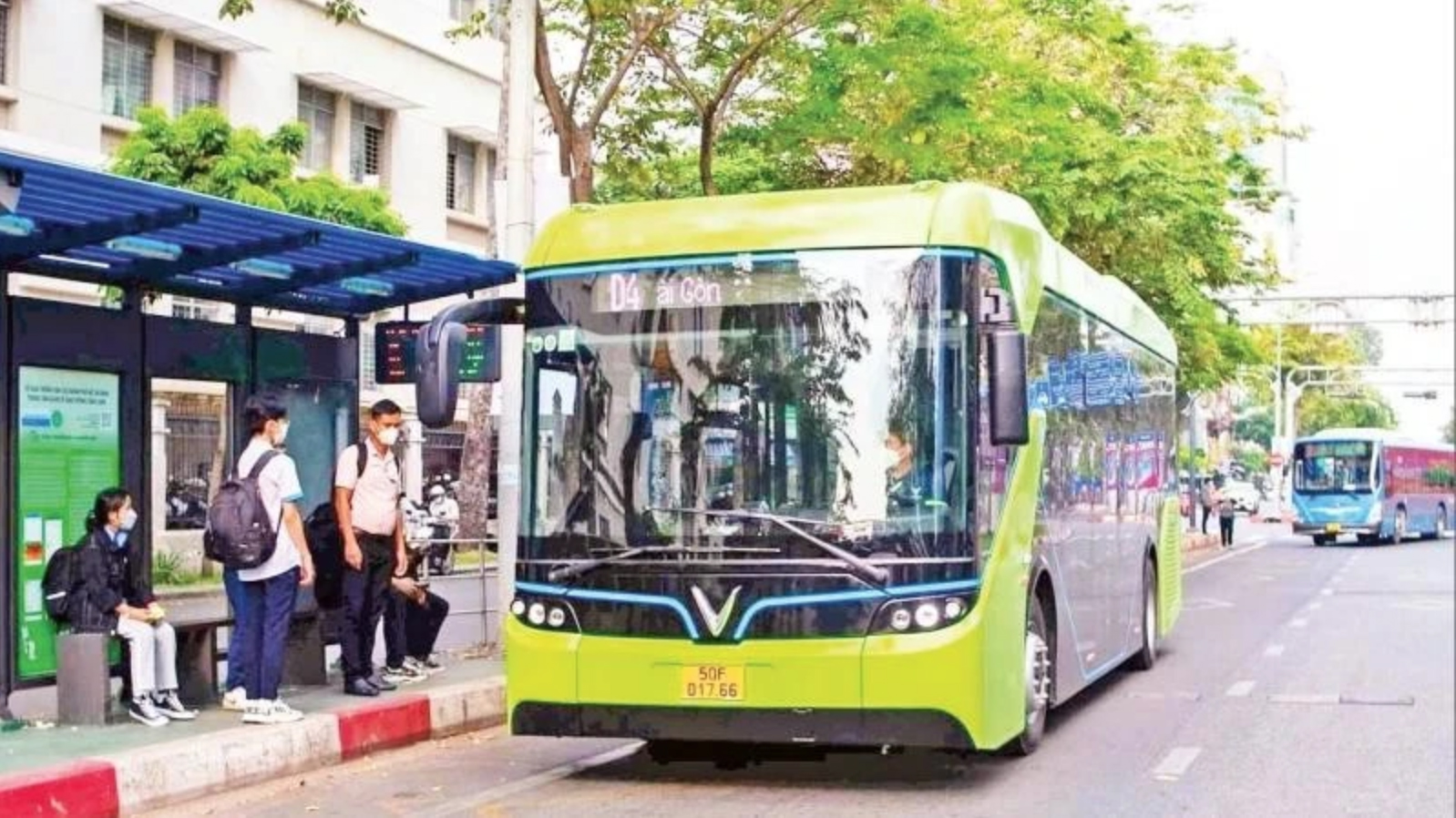
An electric vehicle of VinBus. (Photo: nhandan.vn)

Hanoi and Ho Chi Minh City are gradually transforming their public transport networks, replacing aging buses with environmentally friendly electric vehicles in a bid to phase out diesel vehicles by 2035.

Since launching its first electric route in late 2021, Hanoi has electrified 15 major corridors with 236 zero-emission vehicles. Five routes have been converted to electric operation from the outset of this year alone.

In HCM City, 163 electric buses are now winding through neighbourhoods. The city has encouraged transport firms to convert existing gasoline and diesel bus routes to electric, striving to transition the entire fleet to green energy by 2030. From 2025 onward, all new routes must be operated with electric or green energy vehicles.

Residents have been enthusiastic about electric buses, given improvements in service quality and a convenient payment system. Le Thi Ngoc Diep, a local in Hanoi’s Long Bien district, said she has returned to public transport after electric buses rolled onto her route. She has been pleased with onboard services and hopes that more electric bus routes will be available so people can use them instead of personal vehicles.

Behind the smooth electric rides lies a complex financial puzzle that the two cities are racing to solve. The complete transition carries a price tag of nearly 48.63 trillion VND (1.88 billion USD) for Hanoi alone, with nearly 36 trillion VND from the city’s budget and the remainder from businesses. The funding will be used to cover vehicle purchases, partial interest payments, and charging station infrastructure.

Head of the planning – finance bureau under the municipal Department of Construction Phan Truong Thanh proposed the city pen policies mobilising domestic and international resources, both public and private, for non-emission vehicles and related infrastructure.

HCM City estimated funding needs of over 3.52 trillion VND for the transport conversion initiative for 2025-2030, including 2 trillion VND to subsidise loans for vehicle conversion and about 1.3 trillion VND for charging station construction. The city’s current infrastructure for green buses, particularly electricity and CNG supply stations, remains insufficient.

The municipal Department of Transport calculated that by 2030, to handle 3,300 electric buses, the southern metropolis will need at least 25 electric charging stations with 269 charging posts.

Director of the Bus Transport Enterprise (Saigon Passenger Transport JSC) Nguyen Duy Khanh said the conversion policy aligns with the Government’s net-zero commitment. However, businesses are not ready due to substantial investment costs and the scarcity of bus charging stations across the city.

To ensure the effective operation of electric bus routes, Vice Chairman of the Hanoi city People’s Committee Nguyen Manh Quyen directed departments to complete mechanisms and policies supporting businesses during vehicle investment and conversion, while accelerating investment in technical infrastructure and charging stations for clean energy vehicles.

Beyond transitioning to green energy, the Department of Construction should study and develop criteria for evaluating transport units, moving toward a ‘star’ rating system for green bus companies to improve service quality for Hanoi residents, he stressed./.

(VNA)
TỪ KHÓA:electric vehiclesgreen bus
NGUỒN:VietnamPlus
Bài trước Quảng Trị mở rộng phát triển Khu kinh tế Đông Nam theo hướng công nghệ và môi trường
Bài tiếp [Cà phê Net Zero] Thiết kế bền vững trong bối cảnh đô thị hóa nhanh chóng
Ad imageAd image

Mới cập nhật

Digital Twins hạ tầng giao thông: Từ bài toán công nghệ đến bài toán quản trị dữ liệu quốc gia
Giải pháp 14/07/2026
Huế định hình mô hình phát triển mới giai đoạn 2026 – 2030
Tin trong nước 13/07/2026
Kinh nghiệm của Singapore cho việc ứng phó nắng nóng tại châu Âu: Không chỉ là lắp thêm điều hòa
Năng lượng - Môi trường 13/07/2026
Quy hoạch không gian nước
Góc nhìn 13/07/2026
New-generation industrial parks need to attract high-quality investors: Summit
News 12/07/2026
Tàu hỏa chạy bằng hydro đầu tiên dành cho đường sắt khổ hẹp
Tin thế giới 12/07/2026
Siêu đô thị Jakarta và bài toán ùn tắc chưa lời giải
Nhìn ra thế giới 12/07/2026
Waterkloof – “Pháo đài xanh” giữa lòng thủ đô Pretoria của Nam Phi
Điểm đến 11/07/2026
Chuyển đổi và thích ứng không gian kiến trúc cảnh quan đình làng Huế trong xây dựng đô thị di sản bền vững
Kiến trúc 10/07/2026
Phê duyệt nhiệm vụ quy hoạch chung đô thị Bắc Ninh đến năm 2050
Tin trong nước 10/07/2026
- Advertisement -
Ad imageAd image
© 2000-2026 Ashui.com. All Rights Reserved.
Welcome back!

Sign in to your account

Username hoặc Email của bạn
Mật khẩu

Quên mật khẩu?