

By using this site, you agree to the Privacy Policy and Terms of Use.
Accept
Ashui.comAshui.comAshui.com
  • Home
    • Bookmarks
    • English
      • News
      • Projects
      • Products
    • Ashui Awards
    • Giới thiệu
    • Quảng cáo / PR
    • Liên hệ
  • Tin tức / Sự kiện
    • Tin trong nước
    • Tin thế giới
    • Sự kiện
    Tin tức / Sự kiệnĐọc tiếp
    Lễ trao Giải thưởng Thiết kế bền vững EU-Việt Nam (EVSDA) 2025
    TTXVN 13/12/2025
    Hiệp hội các nhà thầu xây dựng Việt Nam và Hàn Quốc thúc đẩy hợp tác chiến lược
    Báo Xây dựng 13/12/2025
    Hội thảo “Thúc đẩy mô hình khu công nghiệp sinh thái hướng tới phát triển kinh tế tuần hoàn và giảm phát thải carbon cho TPHCM”
    KTSG Online 13/12/2025
    Ứng dụng Internet vạn vật (IoT) trong lĩnh vực giao thông thông minh
    Chinhphu.VN 12/12/2025
    TPHCM chọn 5 điểm quanh metro số 2 để thí điểm đô thị TOD
    KTSG Online 11/12/2025
  • Chuyên mục
    • Kiến trúc
    • Nội – ngoại thất
    • Quy hoạch đô thị
    • Bất động sản
    • Năng lượng – Môi trường
    • Phong thủy
  • Công nghệ
    • Công nghệ mới
    • Giải pháp
    • Xu hướng
    • Ứng dụng
  • Vật liệu / Thiết bị
    • Vật liệu xây dựng
    • Trang thiết bị
    • Trang trí nội thất
    • Thị trường
  • Dự án
    • Giới thiệu dự án
    • Tư vấn thiết kế
    • Kinh tế / Pháp luật
  • Tương tác
    • Chuyên đề
    • Góc nhìn
    • Phản biện
    • Đối thoại
    • Q&A
    • Điểm đến
    • Nhìn ra thế giới
  • Cộng đồng
    • Kiến trúc sư
    • Kỹ sư
    • Thiết kế / Sáng tạo
    • Sinh viên
    • Tuyển dụng
    • Ashui Awards Tour
    • CLB Điện ảnh Kiến trúc
    • CLB Kiến trúc Xanh TPHCM
Font ResizerAa
Ashui.comAshui.com
Font ResizerAa
  • Home
  • Tin tức / Sự kiện
  • Chuyên mục
  • Công nghệ
  • Vật liệu / Thiết bị
  • Dự án
  • Tương tác
  • Cộng đồng
  • Home
    • Bookmarks
    • English
    • Ashui Awards
    • Giới thiệu
    • Quảng cáo / PR
    • Liên hệ
  • Tin tức / Sự kiện
    • Tin trong nước
    • Tin thế giới
    • Sự kiện
  • Chuyên mục
    • Kiến trúc
    • Nội – ngoại thất
    • Quy hoạch đô thị
    • Bất động sản
    • Năng lượng – Môi trường
    • Phong thủy
  • Công nghệ
    • Công nghệ mới
    • Giải pháp
    • Xu hướng
    • Ứng dụng
  • Vật liệu / Thiết bị
    • Vật liệu xây dựng
    • Trang thiết bị
    • Trang trí nội thất
    • Thị trường
  • Dự án
    • Giới thiệu dự án
    • Tư vấn thiết kế
    • Kinh tế / Pháp luật
  • Tương tác
    • Chuyên đề
    • Góc nhìn
    • Phản biện
    • Đối thoại
    • Q&A
    • Điểm đến
    • Nhìn ra thế giới
  • Cộng đồng
    • Kiến trúc sư
    • Kỹ sư
    • Thiết kế / Sáng tạo
    • Sinh viên
    • Tuyển dụng
    • Ashui Awards Tour
    • CLB Điện ảnh Kiến trúc
    • CLB Kiến trúc Xanh TPHCM
Các kênh mạng xã hội
  • Advertise
© 2000-2025 Ashui.com. All Rights Reserved.
News

Hanoi flooding a construction lesson: official

Ashui.com 11/11/2008
4 phút đọc
SHARE

Hanoi authorities and urban planners often “ignore the infrastructure factor when approving the city’s urban projects” and floods due to heavy rains are the consequence.

The argument was put forward by Ngo Trung Hai, deputy head of the Institute for Urban and Rural Zoning under the Ministry of Construction.

How do you evaluate Hanoi’s urban planning given the recent flooding?

Ngo Trung Hai (Photo by Ngoc Nam): The floods show the worst flaw in the city’s urban planning and the heavy price it has to pay.

According to a plan approved in 1998, Hanoi was supposed to prevent flooding with around 40 lakes – more than 10 percent of the city’s area – and four rivers running into the Red River, but the city’s development has meant that those are not enough. Meanwhile the city’s drains are surely only 40 to 50 percent as big as those designed in another plan to improve the city’s drainage system. It’s easy to understand how roads can turn into rivers.

But even according to the design, Hanoi’s drains can only handle rainfall of 170 millimeters a day or less. How can it be blamed for the flooding?

– Of course the drains were not designed for the maximum rainfall, because it would be very costly. But in case of such heavy rains, the city should have emergency drainage systems or measures to control the water flow. For example, instead of waiting for the water to flow outhward into Yen So Lake, the city authorities should save time by driving it northward into the Red River. Hanoi, just like most of our cities, is unable to do that.

The recent flooding hit the city’s new construction works heavily while the ancient ones and those built by the French many years ago are untouched, what’re the reasons?

– There’re two reasons. First, the old ones were built on high areas. Second, the new urban areas have very low-quality infrastructure. In many countries developers aren’t allowed to sell houses when the infrastructure in that area is unfinished. In our country, they are, and the residents have to suffer afterward. The National Conference Center was also hit because it’s too low and should be raised by about one meter or so.

How important is infrastructure to urban planning?
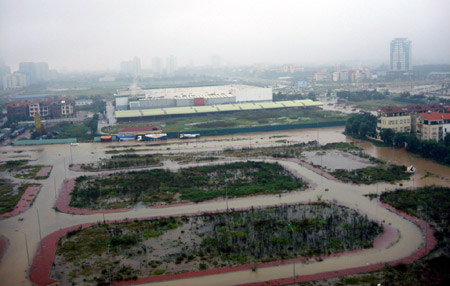
– It should be the primary concern in urban planning but actually it’s not. Recently construction inspectors have found many urban projects lack detailed planning on infrastructure but they are still approved by Hanoi authorities. It’s against construction laws.

What do you think Hanoi should do to prevent flooding?

– It should enlarge lakes, canals and small rivers. It may even have to remove some slums to do this. Recently in Seoul a river was dug to replace a highway while the Netherlands is going to destroy three roads in Amsterdam to give space to waterways.

According to the Construction Ministry, Hanoi has been expanded to have more land for urban development. Do you think the new Hanoi can avoid floods?

– The Institute for Urban and Rural Zoning and international construction experts have suggested that the new urban areas should reclaim land from rivers or lakes. Then the new areas will not be flooded.

By Tuyet Nhung

Có thể bạn cũng quan tâm

Action imperative to combat climate change

Vietnam’s real estate attracts new generation FDI

Hanoi aims for 50% of office buildings to use rooftop solar power

From climate pressure to new urban mindsets

Hanoi forum targets green energy infrastructure for smart cities

Bài trước Khủng hoảng tài chính – tín dụng bất động sản tại Hoa Kỳ và đối chiếu với thị trường bất động sản VN
Bài tiếp Ai làm “méo mó” đất Thăng Long?
Bình luận Bình luận

Bình luận Hủy

Bạn phải đăng nhập để gửi bình luận.

Ad imageAd image

Mới cập nhật

Bảo tồn di sản thế giới trước khí hậu cực đoan: yếu tố “cần” và “đủ”
Góc nhìn 14/12/2025
Đổi đất vàng lấy màu xanh đô thị – Bài 2: Nâng cao chất lượng môi trường sống
Góc nhìn 14/12/2025
Lễ trao Giải thưởng Thiết kế bền vững EU-Việt Nam (EVSDA) 2025
Sự kiện 13/12/2025
Hiệp hội các nhà thầu xây dựng Việt Nam và Hàn Quốc thúc đẩy hợp tác chiến lược
Tin trong nước 13/12/2025
Đổi đất vàng lấy màu xanh đô thị – Bài 1: Định hình những công trình công cộng biểu tượng
Góc nhìn 13/12/2025
Hội thảo “Thúc đẩy mô hình khu công nghiệp sinh thái hướng tới phát triển kinh tế tuần hoàn và giảm phát thải carbon cho TPHCM”
Sự kiện 13/12/2025
NaP architects có 2 dự án chiến thắng tại WA Awards chu kỳ 52
Kiến trúc sư 12/12/2025
Ứng dụng Internet vạn vật (IoT) trong lĩnh vực giao thông thông minh
Tin trong nước 12/12/2025
Mở rộng cơ chế đặc thù từ Nghị quyết 98, ba lực đẩy mới cho TPHCM
Kinh tế / Pháp luật 12/12/2025
KAMiLY House / thiết kế: HGAA, Jieun Jun, Naïve practice (Il Hwan Kim), Taewon Park
Tư vấn thiết kế 11/12/2025
- Advertisement -
Ad imageAd image

Xem thêm

News

A “compass” guiding Hanoi’s urban spatial development

VnEconomy 19/10/2025
News

Industrial property rising in quality

Ashui.com 12/10/2025
News

Ministry of Construction proposes qualified developers for social housing projects

VnEconomy 05/10/2025
News

Tokyo advances carbon-neutral initiatives in port construction

Báo Xây dựng 24/09/2025
© 2000-2025 Ashui.com. All Rights Reserved.
Welcome back!

Sign in to your account

Username hoặc Email của bạn
Mật khẩu

Quên mật khẩu?