A former planning minister comments on the foreign direct investment situation, including the collapse of ballyhooed projects. He calls on the central government to take back control of licensing in cases where projects have a significant impact on industrial development strategy or threaten major environmental damage.
Tran Xuan Gia is a well-known economist, and a former Minister of Planning and Investment. VietNamNet talked with him on August 6 about big foreign-invested development projects.
Have too many multi-billion dollar projects been licensed recently?
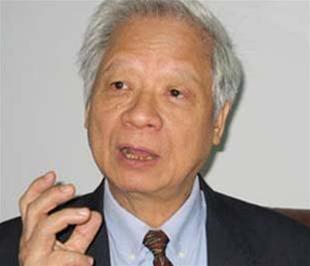 Dr. Tran Xuan Gia : What we need [to see] is not the amount of registered capital, but how paid-in capital has been absorbed by our national economy. I was a little surprised when I heard announcements about projects [supposedly] worth four, five or ten billion dollars.
The biggest of all was an $11 billion petrochemical project to be developed in Phu Yen province by a Singapore investor. They made a lot of noise about this one on the TV news. And then eight months later, they asked to stop the project, said ‘goodbye’ and left so quietly. I feel sad about that and I am sure that the people of Phu Yen didn’t get any benefit from the $11 billion project.
When economic conditions are normal, it is no surprise to see investment projects that have a low ratio of stockholder’s equity to borrowed capital. However, that needs to be watched nowadays, when the economic recession is occurring. In current circumstances, it is not easy to mobilize capital from lenders or other investors. It is easy to understand why highly-leveraged projects, where investors need to borrow perhaps 75 percent of capital from outside, have been slow to get started.
But, doesn’t the big increase in registered FDI show the attractiveness of Vietnam’s investment environment and foreign investors’ confidence in Vietnam’s economy?
It is true that our investment environment is relatively attractive. However, I think we need to pay attention to two things: what’s the fraction of investment capital actually coming in from foreign countries, and what part of the profit realized on investment is re-invested in Vietnam. And, of course, we should encourage investors to re-invest right here the profit they get from their investments in Vietnam. We need to calculate these flows when we consider what we must do to balance foreign currency demand and supply.
That situation means that the objective of mobilizing investment capital from foreign sources as a way of getting foreign exchange is going to be constrained. To the extent that we accept highly-leveraged project proposals, we will not achieve our target of mobilizing more foreign funds from FDI.
Some experts say that too much FDI capital is being poured into the real estate sector. Does that bother you?
I don’t see a problem with foreign direct investment in real estate. If foreign investors come to Vietnam to build offices, hotels and resorts, we can gain experience in project development, architecture and management.
However, after 20 years of attracting FDI, now is the right time for us to consider the capability of Vietnamese enterprises to implement such projects. I believe that our investors now have enough capability to raise capital and management experience to design and carry out such projects. They are spirited enough to hire and manage foreigners to do things that our professional workers cannot yet do.
Many experts doubt if capital can be mobilized for many FDI projects. What is your opinion about that?
 We need to understand that for big projects, foreign investors will not bring all the capital that is needed to Vietnam to implement the projects. Instead, they will focus on the first stage of the project. When they are getting ‘payback’ from the first stage, they will invest it in the second stage, and so on. Consequently, these huge projects will not help much in the task of balancing the foreign currency demand and supply.
Well, then, are there any problems in the FDI structure?
In 2008, 11 percent of FDI capital went to [goods] manufacturing, 28 percent to the iron and steel and aluminium extractive industries, 22 percent to oil and gas and 39 percent to apartment and office building projects. Manufacturing is the sector that needs to be encouraged, but it attracted only11 percent of FDI.
The FDI structure shows that the recent sharp increase in registered FDI is not so much the result of an attractive investment environment for manufacturing as the result of our liberal policies on exploitation of natural resources and use of land.
In some cases, investors have exaggerated the scale of the projects and the expected profitability in order to get investment licenses. That’s a risk especially now that Vietnam has decentralized authority to consider projects and grant licenses.
Oh. You blame the massive licensing on the decentralization scheme?
Decentralisation of authority is actually the democratization of economic management. It’s an indispensable step in economic development. However, not everything should be decentralized.
It’s not feasible to decentralize the planning of industrial structure or sectoral and regional prioritization. Planning for the development of various sectors and regions must be unified, long range, and comprehensive.
We need to have four conditions to implement the decentralization scheme effectively: good programming, a good system, good organization and professional staff. We didn’t prepare well enough when decentralized such planning. That explains why Ba Ria- Vung Tau province has licensed more than ten steel projects. And then, also, the planning can be good, but the execution poor.
What do we need to do to fix the errors?
I think that if we are still unprepared to implement a decentralization scheme effectively, we should revert to the previous centralized system, especially for projects of considerable significance to national development, or may have a major environmental impact.
What really concerns a lot of people is the permissions being granted to projects that cause a lot of pollution, not just in the provinces where they are sited, but to neighboring provinces as well, so there are huge environmental costs that society, not the investors, must bear.
What should we do about ‘pending projects’ which have been left unimplemented in the last over ten years?
We need to investigate every one that’s overdue, keeping the national interest in mind. The licenses granted for these ‘hanging’ projects should be revoked if investigation reveals that they have become hopeless.