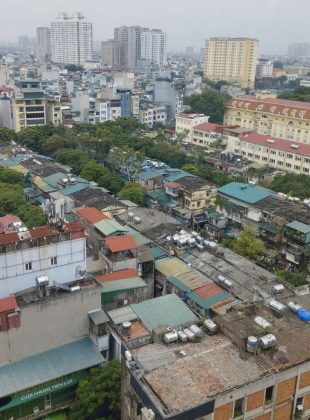
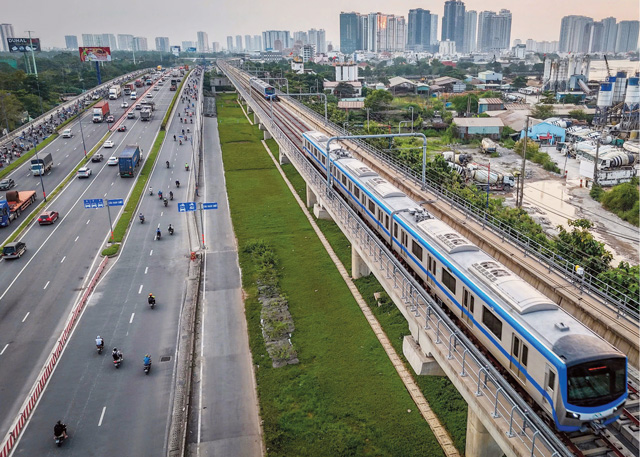
As Ho Chi Minh City accelerates investment in urban rail infrastructure and expands its development ambitions, the challenge is no longer simply how to build more transport links but how to translate them into wider economic and social value. This requires closer integration between transport networks, land-use, and the needs of urban communities.
At a session entitled “Connectivity to Value: The Next Phase of TOD in Vietnam”, held on October 29 as part of the UK-Vietnam Business Forum 2026 in Ho Chi Minh City, city officials, developers, property advisers, and urban planners discussed how to translate investment in urban rail infrastructure into more livable, connected, and sustainable communities.
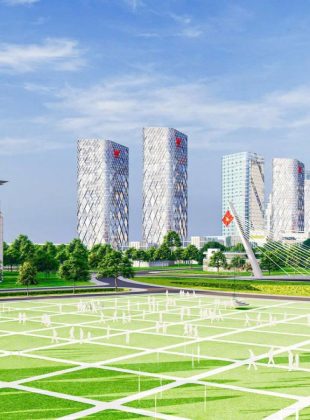
The discussion came as Ho Chi Minh City advances the legal and planning foundations for Transit-Oriented Development (TOD), a model that integrates public transport with urban development and seeks to make better use of land around transit stations.
Planning beyond the station
Dr. Jingfeng Xu, Country Director at the London-headquartered engineering and urban design consultancy Arup, said TOD should be understood through people’s everyday experiences rather than simply population density or land values.
He stressed that no single organization could deliver successful TOD independently. Government agencies, transport authorities, developers, investors, planners, designers, and local communities must work together, looking beyond individual projects to consider the needs of the wider neighborhood.
Mr. Huynh Pham Tuan Anh, Deputy Director of the Ho Chi Minh City Department of Planning and Architecture, outlined the city’s preparations for TOD development. “The model should incorporate public services and public spaces within a defined radius of each station, while also making use of underground and above-ground spaces around transit facilities,” he said.
Land availability remains a major constraint, he continued, adding that a substantial portion of the land required for development would need to come from the State. On the regulatory front, he said Ho Chi Minh City was implementing a package of seven related resolutions, with four already in effect and the remaining three expected to be rolled out shortly. He also highlighted the responsibility of local authorities in decision-making and the importance of coordination between the city council and the municipal administration in developing policies that address the practical needs of businesses.
Developers at the session cautioned against prioritizing short-term gains over the long-term value of TOD projects. Dr. Le Nguyen Minh Quang, Director of Railway and Urban Development at the Becamex Group, said the company was focused on creating lasting benefits for the city and the country rather than pursuing quick returns.
Drawing on his experience leading the city’s urban railway management authority from 2016, Dr. Quang raised concerns about the build-transfer (BT) model, under which private investors construct infrastructure in exchange for land. He noted that China had applied this approach between 2000 and 2015 before discontinuing it. “The risk with the BT model is a mismatch between construction and operation,” he explained.
At Becamex, the approach is to have a master developer oversee the railway from the outset, integrating construction, land development, and operation. Dr. Quang argued that this would provide a more responsible and coordinated framework for TOD implementation than relying on the BT model.
Meanwhile, Ms. Luu Thi Thanh Mau, CEO of the Phuc Khang Corporation, said Vietnam had favorable conditions for TOD, including rapid urbanization, substantial investment in metro and transport infrastructure, and rising public expectations for healthier and more livable urban environments. She said TOD was increasingly being recognized as more than a transport or real estate concept, with its broader purpose being to create complete, inclusive, and resilient communities. In her view, sustainability, housing quality, and the overall quality of urban spaces should be treated as foundations of long-term value rather than costs to be minimized.
For developers, this requires a lifecycle approach to projects, extending beyond initial sales to investment in public spaces, landscaping, shade, ventilation, community facilities, maintenance, and management. Housing should also cater to different income groups and household needs to maintain diverse and vibrant communities.
Ms. Mau added that accelerating TOD over the next decade would require a commitment to designing places around people rather than vehicles. This would depend on long-term collaboration between government agencies, developers, investors, and communities to coordinate planning, infrastructure, housing, public spaces, and operations from the earliest stages.
Changing market expectations
Mr. Neil McGregor, CEO of Savills Vietnam, said the market was already evolving, pointing to Vietnam’s track record of overcoming barriers and delivering major projects as a source of confidence. “Vietnam has a remarkable success rate at getting things done, breaking down barriers, getting through challenges, and making things happen,” he said. “We have a fantastic legal framework now, with the Law on Urban Development taking effect on October 1. We also have talk of evolving capital markets around the VIFC [Vietnam International Financial Center] to bring more international capital in.”
He also highlighted the country’s evolving legal framework for urban development and the potential for capital markets, including the VIFC, to attract more international investment. Mr. McGregor observed that buyers and tenants were gradually moving away from a predominantly speculative mindset as transport infrastructure takes shape.
He added that office occupiers were increasingly considering the amenities available around a building, such as affordable food outlets and gyms, rather than focusing solely on factors such as green building certification.
At the local level, Mr. Tony Chan, Southeast Asia Planning and Urban Design Leader at Arup, said Ho Chi Minh City was developing a roadmap toward 2045, integrating the city with Binh Duong and Ba Ria-Vung Tau while connecting innovation, financial, commercial, and industrial districts through an expanded metro network. However, he cautioned against pursuing growth for its own sake, stressing that urban development should improve quality of life, attract high-quality talent, and meet social and environmental objectives.
Climate resilience is another major challenge, with rising sea levels, land subsidence, and heavier rainfall requiring a shift toward more adaptive urban planning. New development areas should account for natural conditions and future climate scenarios.
Mr. Chan also emphasized the need to integrate transport and spatial planning. Rather than focusing on targets such as the number of kilometers of metro lines or roads built, the city should assess the wider benefits that infrastructure delivers. “Public transport must form the backbone of a sustainable city,” he said, warning that road expansion alone cannot provide a long-term solution to traffic congestion, comparing it to “trying to cure obesity by loosening your belt.”
He also highlighted the TOD guidelines for Ho Chi Minh City, developed by Arup with local experts and support from the UK Government. Beyond transport and land-use planning, the guidelines address affordable housing and climate resilience, aiming to create livable communities around transit stations.
Alongside key areas such as the VIFC, the city should also develop new urban centers that serve both local residents and international professionals, with suitable housing, convenient living environments, and essential services.
Nhu Quynh