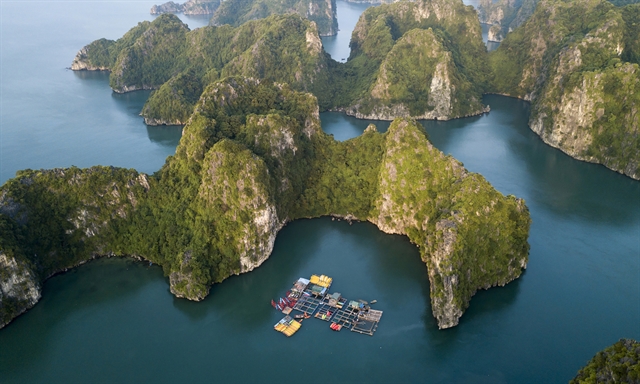
Việt Nam is a treasure trove of cultural and natural wonders, showcasing numerous UNESCO-recognised world heritage sites.
From the ancient streets of Hội An to the breathtaking landscapes of Hạ Long Bay, these sites reflect the country’s rich history, diverse traditions and stunning biodiversity. Each heritage site tells a unique story, inviting both locals and visitors to explore the essence of Vietnamese identity.
As the urgency to preserve and promote these invaluable assets grows, local communities are stepping forward to play an active role. By engaging the public through awareness-raising activities, they aim to ensure that heritage is protected and serves as a source of pride and benefit for all.
“Preserving and promoting heritage values is one of the most pressing issues today, not just in Việt Nam, but globally,” Associate Professor Dr. Bùi Hoài Sơn, a Standing Member of the National Assembly’s Committee on Culture and Education told Việt Nam News.
“Heritage embodies the soul, historical memories and the essence of our national identity. Each piece of heritage serves as a witness to history, allowing current and future generations to connect with the past and nurture a sense of national pride.”
In this era of globalisation and rapid urbanisation, ancient structures face overwhelming challenges. Modern high-rise buildings encroach upon traditional cultural spaces, while sacred festivals often become overly commercialised to cater to tourism demands. Climate change and natural disasters further threaten natural heritage, including coral reefs and primeval forests. Thus, conservation has evolved into a strategic necessity for sustainable national development.
Localities across Việt Nam have recognised that heritage conservation cannot rely solely on state agencies, it requires active participation from the community. Solutions now focus on empowering local people, blending scientific approaches with indigenous values.
Sơn emphasises that successful initiatives follow the principle of state creation and people’s companionship, with the community at the heart of the process.
“When individuals are educated about heritage and given opportunities to benefit from it, preservation becomes more sustainable, and its value is passed down through generations,” Sơn said.
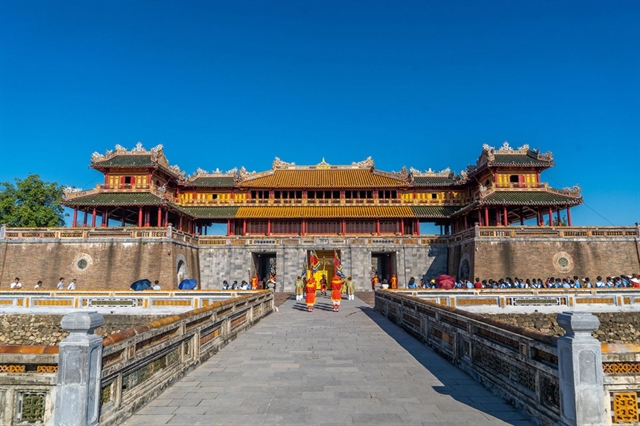
In Ngọc Hà Ward in Hà Nội, Nguyễn Văn Lợi recalls the profound experience of conducting a ceremony for ancestral spirits to mark the transition from the old year to the new year in 2025.
“I’ve served as the chief celebrant at the Tổng communal house for years,” Lợi said.
“This year, I was honoured to perform rituals at Thăng Long Imperial Citadel. Initially, my career had no ties to culture, but as I grew older, I became involved in our local spiritual practices. Wearing the official uniform and performing rituals at the Citadel filled me with pride.”
Since its recognition as a World Cultural Heritage site, the Thăng Long-Hà Nội Heritage Conservation Centre has revitalised royal rituals at Thăng Long Imperial Citadel. These ceremonies, including the Tiến Xuân Ngưu (Spring Buffalo Offering) and others, are considered the soul of the citadel.
The restoration efforts involve a diverse group of community members, from retired officials to construction workers, showing that heritage truly belongs to the people.
Thăng Long Imperial Citadel, once perceived as distant due to its royal history, has grown closer to the community through active participation in its conservation. For students in Hà Nội, the citadel has become a popular site for extracurricular activities, with tens of thousands visiting each year.
Community awareness is very essential, it fosters a sense of responsibility in protecting heritage. In Thanh Hóa Province, Hồ Dynasty Citadel has similarly transformed into a space for educational activities.
Nguyễn Bá Linh, Director of the Hồ Dynasty Citadel Heritage Conservation Centre, said, “We recognise the community’s role in managing heritage sites. Our centre collaborates with schools to create programmes that nurture a love for heritage in children.”
While each type of heritage demands its own conservation strategies, they share a common need for public support. Phong Nha-Kẻ Bàng National Park in Quảng Trị Province illustrates this challenge well, as the park is home to over 60,000 residents from various ethnic groups whose livelihoods depend on natural resources.
With assistance from the government and international organisations, Quảng Trị has made strides in balancing livelihood needs with conservation efforts.

Deputy Director Đinh Huy Trí of the Phong Nha-Kẻ Bàng National Park Management Board states, “Our focus is on sharing benefits while minimising impacts on world heritage.”
In 2024, the park initiated a sustainable forestry development programme that provided local communities with trees and seedlings, supported livelihood models, and offered payments for forest protection – totalling approximately VNĐ20 billion (US$769,000) annually. Additionally, thousands of locals find employment in tourism-related services, such as photography and souvenir sales.
Hoàng Văn Bình, head of the Farmers’ Association in Bồng Lai 2 Village said, “Our members have received livelihood support from the National Park, allowing us to raise livestock under the forest canopy and take part in forest conservation. Our lives have improved, and now we actively participate in protecting our natural heritage.”
As of now, Việt Nam’s UNESCO-recognised heritage sites have made significant progress in preserving and promoting their values. Many sites have become vital contributors to local socio-economic development, exemplified by Thăng Long Imperial Citadel, which attracted 745,000 visitors in 2024, solidifying its status as a major tourist destination in Hà Nội.
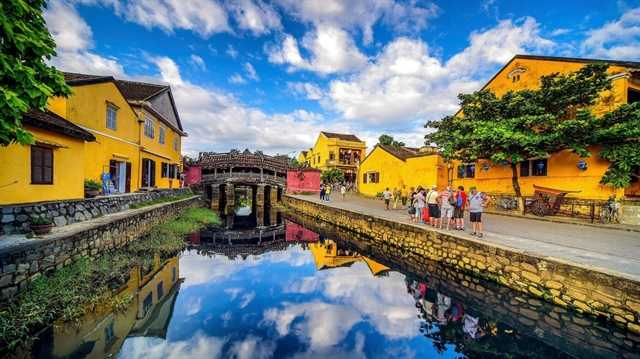
Other notable destinations like Hội An and Hạ Long Bay continue to drive tourism in their respective provinces. In recent years, Việt Nam has improved its legal framework, notably through the amended 2024 Law on Cultural Heritage, ensuring alignment with international standards.
However, challenges persist. Economic development poses risks of encroachment on heritage sites. For instance, Hạ Long Bay has seen construction projects encroach upon its natural beauty. Experts emphasise the need for a balanced approach that harmonises interests among all stakeholders involved in heritage conservation.
Associate Professor Đặng Văn Bài, Vice Chairman of the National Cultural Heritage Council, said, “When communities engage, they develop a deeper, long-term understanding of cultural heritage. We need to implement education programmes in schools and through media to shift community perceptions.”
A standout example of effective collaboration in preserving heritage is the Tràng An Scenic Landscape Complex in Ninh Bình. With around 10,000 direct workers and 20,000 indirect workers, the complex plays a crucial role in the province’s socio-economic structure.
Director Bùi Việt Thắng said, “Our public-private partnership model involves various stakeholders: the state manages and plans, enterprises invest in infrastructure and the community operates services and protects the environment. This collaborative framework respects the integrity of heritage while harmonising interests.”
In 2014, Tràng An welcomed 2.2 million visitors, a number that has since skyrocketed, generating tourism revenue of VNĐ6.5 trillion ($250 million) in 2024. Heritage has thus become a dual resource, enhancing both material and spiritual lives.
Ultimately, when heritage is well-preserved, it transforms into a shared treasure – no longer viewed as distant relics of the past, but as integral parts of community identity that foster both remembrance and future aspirations.
Wealth of recognised locationsViệt Nam boasts nine UNESCO-recognised World Heritage Sites: Huế Monuments Complex, Hội An Ancient Town, Mỹ Sơn Sanctuary, Hạ Long Bay – Cát Bà Archipelago, Phong Nha – Kẻ Bàng National Park, Thăng Long Imperial Citadel, Hồ Dynasty Citadel, Tràng An Scenic Landscape Complex, and the Yên Tử, Vĩnh Nghiêm, Côn Sơn and Kiếp Bạc Complex of Monuments and Landscapes.
Thanh Nga (VNS)