To become an industrialized country and maintain high economic growth, Vietnam has to accept that migration is here to stay, and focus on managing it effectively, Steve Price-Thomas, Country Director of Oxfam Great Britain in Vietnam, said.
Thanh Nien Weekly: What are your views on the migration situation in Vietnam?
 Steve Price-Thomas : Throughout history, in every country of the world, people have migrated to have better opportunities and a better life. Migration is a normal part of life, and it also enables the economic growth. If Vietnam has succeeded in terms of achieving outstanding economic growth, it is because of migration.
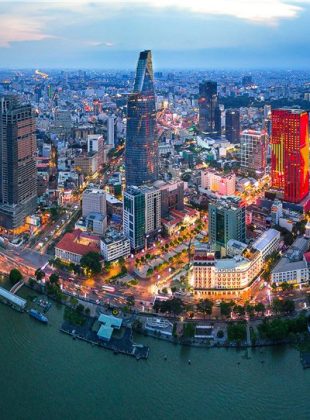
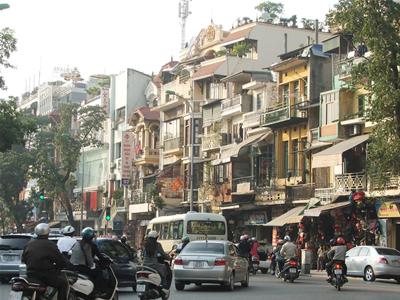
However, there is legitimate concern that infrastructure in some big cities like Hanoi and Ho Chi Minh City cannot cope with the influx of people.
We have to keep in mind that the population in Vietnam has grown very rapidly in the past 15 years, and it continues to rise. When people choose to migrate, it is because they think life in the place they’re going to can be better that the life in the place they left. This creates a big challenge for major cities in Vietnam in terms of providing adequate infrastructure and services to everybody.
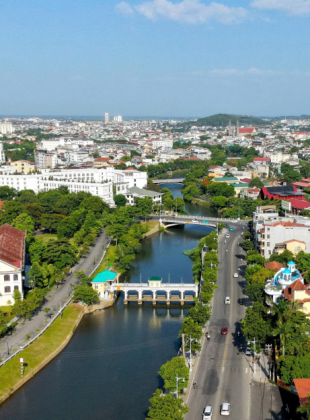
There are big cities in Asia with high density populations than Vietnam can learn from in dealing with the challenges. For example, Tokyo, with a huge population, is a large, well-planned city and a pleasant city to live in. Ho Chi Minh City, Hanoi and other cities in Vietnam are very small compared to Tokyo. So it is definitely possible to make big cities in Vietnam pleasant, healthy places to live if they have good planning of buildings, zoning of different types of land, traffic congestion management, and enforcing laws on planning.
However, the question is: will the big cities in Vietnam choose to learn from Tokyo, Singapore, or Hong Kong which are crowded but still function very well or will they become more like Jakarta which often floods when it rains, has huge traffic problems and doesn’t offer a healthy environment for everyone to live in?
So, if Vietnam were to have effective planning and zoning of the cities, it needn’t prevent migration?
– Yes, that’s right.
 In every country in the world, migration has been an important driver of economic growth. It is the same in Vietnam. Ho Chi Minh City and other provinces around it contribute a very large part of Vietnam’s GDP, which is also driven by people who migrate into those areas to work.
So, if Vietnam wants to be a basically industrialized country, and continues to keep economic growth high, Vietnam has to accept that migration is here to stay. It is not a question of how to stop migration but how to manage it effectively.
What should Vietnam do?
– I think Vietnam can do a number of things. As I said earlier, Vietnam can learn from places like Tokyo or Singapore. I think the government can have a policy of promoting cities around the big cities so that people can migrate there, rather than coming into the center of Hanoi and Ho Chi Minh City.
I also think that Vietnam should invest in infrastructure and services in existing townships. For example, I went to Da Nang a few weeks ago, and I was very impressed with the development there. Clearly the thought that they put into the infrastructure, planning new areas, and trying to develop spaces well mean they plan for more people to come. They are doing this in a way that makes the city a pleasant city to live in. So maybe some people might migrate to Da Nang instead of Ho Chi Minh City.
Also, if the planning law is strictly enforced, it can make a city function more efficiently with different zones. Good city governance is an important part of this. People can make a free choice: to live in the center zones of the city which are generally more expensive or in outer zones where it is still nice but cheaper.
Can the rural and mountainous areas of Vietnam provide opportunities that allow people to feel secure about living and working there, instead of in big cities?
– Vietnam is the world’s second largest exporter of rice, a significant exporter of coffee and so on. So, the rural economy is still very important. If opportunities that help people benefit from the poverty reduction and economic growth are in the place where they are living now, they are less likely to want to move.
The government, over the past 20 years, has had a very good policy to promote poverty reduction for everybody in Vietnam. Vietnam has been incredibly successful in poverty reduction, with the rate going down dramatically from 59 percent in 1992 to around 14 percent now.
So what Vietnam should do, I think, is to make sure that the remaining 14 percent of people living in poverty – who are mostly ethnic minority people – continue to benefit from economic growth, and have opportunities, either to earn significantly more money from farming, or from small industries and local towns.
Vietnam should stay focused on the long-term goal of poverty reduction and equitable growth that benefits everybody.
It is also about planning for the long term and having good city governance. For example, when making planning decisions, cities need to be guided not by shorter term gains over two to five years, but consider what would be the right decisions for cities over the next 50 to 100 years. Cities need clear laws and regulations that are implemented and enforced effectively and transparently.
| HANOI COULD CLOSE ITS DOORS
Hanoi’s master zoning plan through 2030 is now under discussion as the National Assembly aims to restrict migration into the city. Under the plan, Hanoi’s population will stand at between 7.1-7.4 million by 2020. Its population now is 6.4 million. The city earlier this year announced the draft Capital Law, which aims to tighten permanent residency regulations in the capital city by asking residency applicants to hold a legal job with a salary double the regulated minimum wage in order to gain official residency status. The monthly minimum wage in Hanoi’s urban districts is now VND980,000 (US$53.08). Another requirement is that the people must have legal accommodation in the capital or hold temporary residency continuously for at least five years, according to the bill. The current requirement is one year. |
Reported by Bao Van